Prevent Orphan Lids and Stockouts: A Takeout Container Supplier Change-Control Plan

05 cover change control

A recent Reddit discussion began with a simple frustration: a takeaway shop changed container design, old lids stopped fitting and users now had to keep two separate stacks. Restaurant owners have described the same problem at commercial scale—hundreds or thousands of lids that no longer match available bases.

This is not only a compatibility problem. It is a supplier change-control failure.

When buying food containers and lids in bulk, control the pair, the approved design and the transition plan before a change happens.

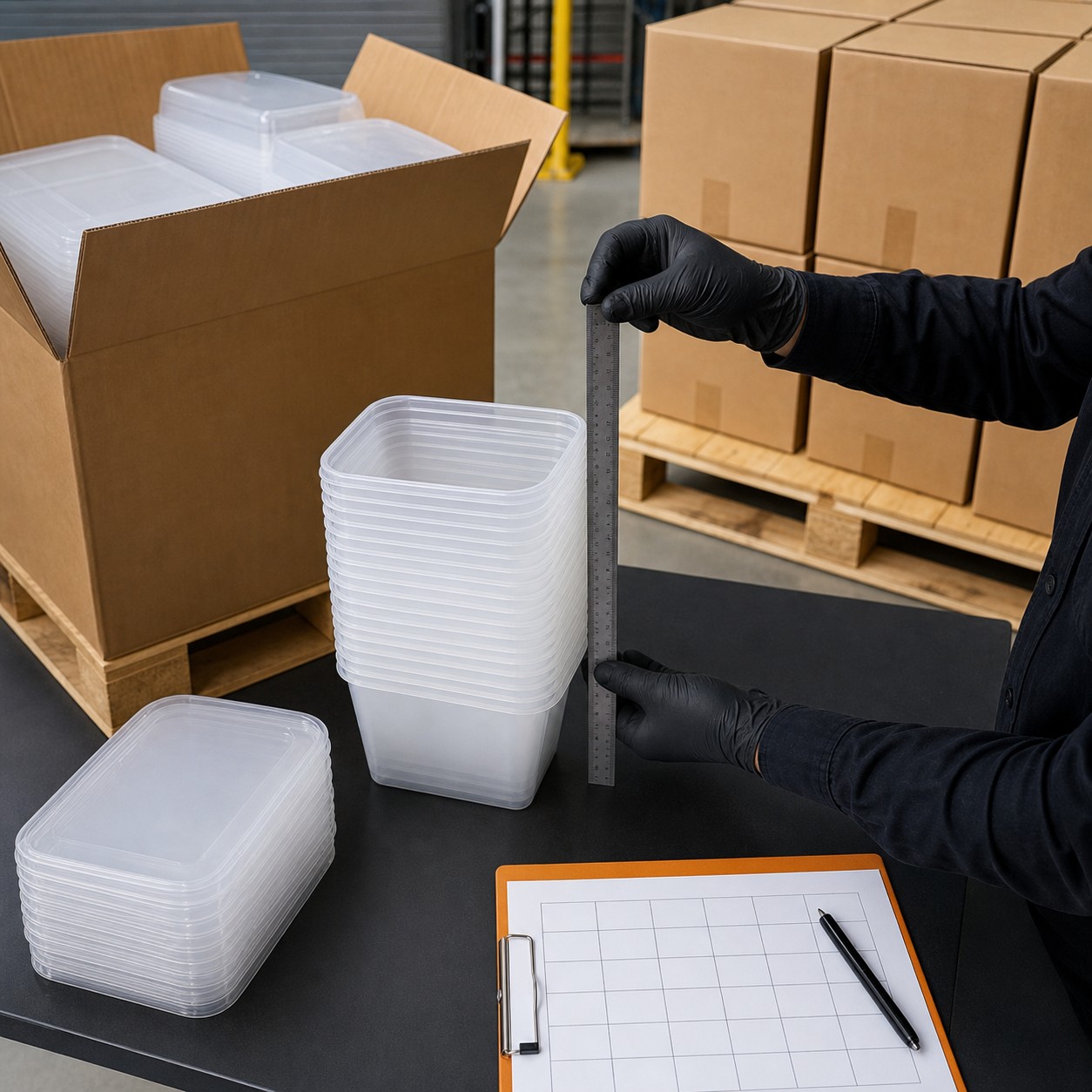
Packaging buyer comparing old and new takeout container lids during a controlled supplier transition

What can change without looking obvious?

A supplier may change mold tooling, rim geometry, wall thickness, resin source, color, lid depth, packing count or manufacturing site. The new product can appear similar while closing force, leak resistance, nesting or hot-fill behavior changes.

Even a beneficial design improvement can strand inventory when bases and lids are not transitioned together.

Build a controlled base-and-lid master

For every approved set, record:

  • supplier and manufacturing site;
  • base and lid SKU;
  • revision or drawing date;
  • critical dimensions and tolerances;
  • resin, color and intended use;
  • approved golden samples;
  • carton count and labeling;
  • test methods and acceptance results;
  • first approved lot and most recent verified lot.

Purchasing should order from this controlled master, not from a generic description such as “32 oz rectangular container.”

Require advance change notification

The supply agreement should require written notice before changes that can affect fit, performance, compliance or presentation. The notice period should allow sampling, testing, customer approval and inventory transition.

Define what counts as a change. Include tooling, cavity repair, dimension, formulation, additive, colorant, supplier, manufacturing location, artwork, packing and carton configuration.

Use a transition gate

Do not allow old and new stock to mix informally. A practical gate includes:

1. supplier change notice received; 2. revised drawings and documents reviewed; 3. samples compared with the golden sample; 4. fit, leak, stack and application tests passed; 5. remaining old bases and lids counted as matched sets; 6. cutover date agreed; 7. cartons clearly identified by revision; 8. staff and customers informed where necessary.

If old lids do not fit new bases, the commercial plan should state who consumes, replaces or credits the remaining components.

Prepare a backup before a stockout

An emergency is the worst time to discover that a substitute lid leaks. Pre-qualify an alternate set with its own sample, specification and test result. The backup does not need to be identical; it needs to be approved for the same menu and service conditions.

Keep lead time, minimum order, local buffer stock and import risk in the continuity plan. A low unit price has limited value if one disruption forces an untested replacement.

Watch these early-warning signals

  • carton artwork or labels change without explanation;
  • closing force changes;
  • staff report that only some corners lock;
  • nesting height or stack count changes;
  • bases and lids arrive in different ratios;
  • a supplier proposes “equivalent” material without revised evidence;
  • complaint rate increases after a new lot;
  • emergency orders become frequent.

Quarantine questionable lots and compare them with the approved control before release.

What to ask a manufacturer

Ask how drawings, molds, material lots, in-process measurements, final fit checks and customer change notices are controlled. Review the manufacturer’s factory and quality workflow and make the notification requirement part of the purchase order.

Frequently asked questions

Is the supplier responsible for unused old lids?

Responsibility depends on the contract and the reason for the change. Agree the transition and obsolete-inventory treatment in writing before ordering.

Can a nominally identical container be used as a substitute?

Only after the exact base and lid pass the required application tests and document review.

How long should change notice be?

Set it from sample/testing time, customer approval, lead time and remaining inventory. There is no universal period.

Should buyers mix old and new revisions?

Not unless compatibility is explicitly verified. Separate and label transition stock.

Buyer takeaway

Orphan lids and emergency stockouts are preventable when packaging is managed as a controlled system rather than a generic commodity.

To review a continuity plan, contact JR DELIPACK with the current base/lid codes, monthly usage, lead time, buffer-stock policy and required change-notice window.

Topic sources

Contract, inventory and product-suitability decisions should be reviewed for the specific commercial program.

Freezer-Safe PP Food Containers: A Freeze-Thaw and Stacking Buyer Checklist

04 cover freezer pp

Meal-prep discussions repeatedly ask for one container that is light, sealable, stackable, freezer safe and practical for transport. For a B2B frozen-meal program, those words must become measurable conditions.

Polypropylene is used in many food-container applications, but a material label alone does not prove that every finished container will resist cracking, lid lift, deformation or impact after freezing. Verify the exact SKU and thermal cycle.

Explore JR DELIPACK PP food-container formats, then test shortlisted samples with the real frozen product.

PP meal containers being evaluated after a controlled freezer stacking test

Why room-temperature testing is not enough

Low temperature can change stiffness and impact behavior. Food also expands during freezing, while stacked containers carry top load in a freezer, carton or vehicle. A lid that fits perfectly when empty may lift after the food expands or after the rim is stressed.

FDA food-contact guidance distinguishes refrigerated storage, frozen storage and frozen or refrigerated foods intended to be reheated in the container. The regulatory basis and use instructions should match the actual program.

Define the intended cycle first

Record:

  • food type, fat content and portion weight;
  • fill temperature and cooling method;
  • freezer set point and storage time;
  • headspace and fill line;
  • stack height and carton load;
  • handling and delivery route;
  • thaw method;
  • whether reheating occurs in the same container;
  • whether the lid is removed or vented.

“Freezer safe” without these conditions is too broad for a purchase specification.

A practical freeze-thaw test

1. Inspect and measure before filling

Record base and lid codes, sample count, dimensions, closure feel and visible defects. Keep untested controls.

2. Fill with the real food

Use the normal portion and leave the intended headspace. Water alone does not reproduce every oil, sauce or solid-food condition.

3. Cool and freeze using the real process

Follow the production sequence. Rapid and slow freezing may create different food and package stresses.

4. Apply realistic stacking

Stack containers at the intended height or simulate the agreed top load. Inspect base bowing, lid lift and wall contact.

5. Add handling stress

After freezing, perform a controlled handling or low-height drop test based on the distribution risk. Do not invent a universal pass height; agree the method in advance.

6. Thaw or reheat as intended

Follow the customer instruction. If the container will move from frozen storage to microwave reheating, that is a combined use case requiring suitable evidence and operational testing.

7. Score the result

Inspect cracks, whitening, corner damage, seal loss, leakage, deformation, nesting damage, odor and ease of opening. Photograph every failure.

Stackability is more than a flat lid

Evaluate loaded stacks, not only empty packaging. Confirm that the upper container is located securely, weight transfers through the intended surfaces and the bottom container does not buckle. Check freezer shelf space and carton cube as well as stability.

What distributors should request

Ask for resin and component information, exact base/lid pairing, intended conditions of use, dimensions, unit-weight tolerance, packing, storage recommendations, available test reports, lot traceability and change notification. Review factory and quality controls before approving a broad product family.

Frequently asked questions

Does PP automatically mean freezer safe?

No. Verify the complete finished product and intended cycle.

How much headspace should be left?

It depends on the food and process. Establish it during product trials and document it in the filling specification.

Can a freezer-safe container also be microwaved?

Only when both claims are supported for the exact SKU and instructions. One claim does not prove the other.

Should a buyer test one sample?

No. Use multiple samples representative of normal variation and the risk of the program.

Buyer takeaway

Freezer performance is a system property: container, lid, food, fill, headspace, freezing, stacking, handling and thawing all matter.

For sample planning, contact JR DELIPACK with the product, portion, freezer temperature, storage time, stack height, thaw/reheat method and annual volume.

Sources and topic discovery

This is general procurement guidance. Confirm food-contact, storage and reheating suitability for the exact SKU and intended market.

Hinged vs Separate-Lid Sauce Cups: A Labor, Storage and Leak Comparison

03 cover sauce cups

Food-truck operators on Reddit describe a small item that creates a large operational headache: thousands of sauce portions, loose cups and lids in a tight workspace, pre-filling labor, self-service mess and customers taking more than expected.

The best sauce-cup system is not decided by the lowest cup price. It is decided by the complete cost of the cup, lid, filling step, storage, closing errors, spoilage and customer experience.

JR DELIPACK offers hinged and separate-lid PP sauce-cup formats. The exact model should be tested with the real sauce and service workflow.

Food truck team comparing hinged and separate-lid plastic sauce cups

What changes when the lid is attached?

A hinged cup keeps the lid and base as one piece. Staff pick one item, fill it and close it. This prevents a base-and-lid count imbalance and reduces loose parts around a truck or fast-moving packing line.

A separate-lid system uses two components. It may support several cup sizes, allow dense cup nesting and give buyers more flexibility in how cups and lids are staged. That flexibility only creates value when the matching lid is controlled and easy to pick.

Compare the complete served-portion cost

Use this formula:

Cost per served sauce portion = cup + lid + filling labor + expected loss + storage/handling cost

Expected loss can include dropped lids, misclosures, cracked cups, overfilled portions, expired prefilled sauce and unused self-service portions.

Run a time-and-motion test

Ask several staff members to prepare a realistic batch with each candidate. Record:

  • time to pick, fill, close and stage 50 portions;
  • number of misclosures or rework events;
  • sauce on rims or gloves;
  • cups dropped or lids lost;
  • completed portions per storage tray;
  • time to restock during service.

A difference of one second per portion becomes nearly 17 minutes over 1,000 portions. Small handling improvements matter at food-truck, stadium, catering and chain volume.

Test the sauce, not water alone

Thin vinaigrette, oily chili sauce, ketchup and thick aioli behave differently. Test the intended fill level and product temperature. Close the cup using the normal line method, then tilt, invert where the application requires it, stack, shake gently and inspect after the actual delivery window.

Document the exact cup and lid codes. “2 oz” does not prove that two suppliers’ lids are interchangeable.

Hinged versus separate lid at a glance

Decision factorHinged cupSeparate-lid cup
PickingOne componentTwo components
Orphan-lid riskVery lowMust be forecast as matched sets
Line speedOften fasterDepends on staging and closure
Nesting and carton designMust be checked by SKUOften flexible, but two cartons may be needed
Shared lids across sizesNot applicablePossible only with documented compatibility
Open presentationAttached lid remains visibleLid can be removed completely
Changeover riskWhole item changes togetherBase and lid transition must be coordinated

Packets, cups or sauce on the food?

Reddit operators also compare sealed packets, portion cups and applying sauce directly to the food. Packets reduce filling labor but can cost more and encourage over-grabbing. Cups support house-made sauces and portion control but add filling and refrigeration work. Applying sauce directly can reduce packaging, but only where the menu and customer choice permit it.

Do not force one method across every condiment. Segment by food-safety requirement, customer demand, portion value and service speed.

What belongs in the RFQ

Request capacity, practical fill line, material, cup and lid codes, carton count, carton dimensions, nested height, closure method, intended food/temperature conditions, sample quantity and change-notification terms. Review the supplier’s factory and quality process and approve a golden sample before scale purchasing.

Frequently asked questions

Are hinged sauce cups always cheaper?

Not necessarily by piece. Compare the complete served-portion cost, including labor and inventory loss.

Can one lid serve 1 oz, 2 oz and 4 oz cups?

Only when the manufacturer documents the shared rim and every pairing passes fit and leak tests.

Should sauce cups be prefilled?

That depends on the sauce, temperature control, holding time and local food-safety rules. Confirm the process with the responsible food-safety authority.

What is the most important sample test?

Use the real sauce and real staff workflow, then combine closing-speed and leakage results.

Buyer takeaway

The right cup is the one that controls sauce, labor and inventory together. Contact JR DELIPACK with the sauce type, portion size, weekly volume, service environment and preferred lid style.

Topic sources

Food handling and product suitability must be verified for the exact sauce, temperature and local requirements.

制作最新版本的

Wholesale Plastic Food Containers with Lids: The Leak and Lid-Fit Checklist

02 cover lid fit

Restaurant owners regularly describe an expensive packaging failure: thousands of lids remain in stock after a supplier changes the matching base, or a new batch looks compatible but leaks when it is stacked and delivered. The unit price may be low, yet the operational loss is high.

When purchasing plastic food containers in wholesale quantities, treat the base and lid as one controlled system. A diameter, capacity or catalog photo is not enough to prove compatibility.

Quality inspector testing the seal of clear PP food containers with matching lids

Why “same size” does not mean “same lid”

Two containers can both be sold as 16 oz while using different rim geometry, flange thickness, draft angle, lid depth or locking bead. Small dimensional differences affect closing force and leak resistance. Heat, stacking pressure and normal manufacturing variation can make a marginal fit fail in service.

The first rule is simple: record the manufacturer’s exact base SKU and exact lid SKU together. Do not approve substitutions only by nominal capacity.

The eight-point pre-order checklist

1. Confirm the pairing in writing

The quotation, specification sheet, approved sample and purchase order should name both components. If one lid serves several bases, list every approved pairing.

2. Measure more than one sample

Sample units from different stack positions and, when possible, different production lots or mold cavities. Measure critical rim dimensions and container height with an agreed method.

3. Test closing force

Kitchen staff must be able to close the lid quickly and consistently. A lid that requires excessive force slows the line; one that appears closed before the rim is fully engaged creates hidden leaks.

4. Run a visual engagement check

Mark the rim at several points and confirm full, even engagement. Pay attention to corners on rectangular containers and hinge areas on attached-lid formats.

5. Run a fill-and-tilt test

Use the real product or a safe simulant with similar viscosity and oil content. Fill to the intended level, close using the normal process, tilt through agreed angles, then inspect after a defined time. A soup program needs a more demanding liquid test than a dry bakery item.

6. Add squeeze and stack pressure

Delivery bags and cartons apply side and top loads. Test hand squeeze, realistic stacking and movement. Inspect whether the lid lifts, the wall buckles or liquid reaches the rim.

7. Test hot and cold conditions

Fit can change after hot filling, cooling, refrigeration or freezing. Test only within the supplier’s stated intended conditions. Do not assume a room-temperature fit result covers every thermal cycle.

8. Keep a golden sample

Sign and date the approved base and lid samples. Retain drawings, photographs, measurements and test results. Future deliveries should be compared with the approved control.

Preventing orphan-lid inventory

Lids become stranded when purchasing treats them as a generic consumable. Reduce the risk by:

  • standardizing on fewer rim families;
  • negotiating change notification before tooling or design changes;
  • keeping base and lid forecasts linked;
  • monitoring inventory as matched sets, not separate unit counts;
  • requiring sell-through or transition planning when a SKU is discontinued;
  • avoiding mixed unlabeled lids at the packing line.

This is especially important for distributors supplying multiple restaurant customers. A “universal lid” creates value only when compatibility is documented and stable.

Separate lid or hinged lid?

Separate lids can support shared-lid systems across capacities, while hinged containers remove the separate-lid picking step. Hinged formats can improve line speed and prevent orphan lids, but may take more storage volume and are not ideal for every meal. Compare labor, carton cube, closure performance and customer use—not just piece price.

What belongs in the purchase order

Include base SKU, lid SKU, resin, color, dimensions, unit-weight tolerance, packing count, carton dimensions, approved samples, fit test, leak test, change-notification requirement and complaint process. Ask how the supplier controls mold maintenance and dimensional consistency through its factory and quality workflow.

Frequently asked questions

Can lids from different suppliers be interchangeable?

Sometimes, but never assume it. Compatibility should be measured and tested, then controlled in the specification.

Is a snap sound proof of a complete seal?

No. A sound can occur before all corners or rim sections are fully engaged. Use visual and leakage checks.

Does leak-resistant mean leak-proof?

Only use a claim supported by a defined test and application. Orientation, fill level, viscosity, temperature and travel time matter.

How many samples should a buyer test?

There is no universal number. Use enough samples to represent normal variation and the risk of the application; high-volume soup delivery deserves a stronger plan than a low-risk dry-food use.

Buyer takeaway

The costly failure is not simply a leaking container. It is an uncontrolled packaging system that creates spills, complaints, wasted lids and emergency substitutions.

For a base-and-lid review, contact JR DELIPACK with the target capacity, food type, fill temperature, travel time, carton requirement and proposed test method.

Topic source and related reading

Performance claims must be tied to a defined test, exact component pairing and intended conditions of use.

Why Takeout Food Gets Soggy: A 60-Minute Packaging Test for Restaurants

01 cover hot food delivery

Reddit’s restaurant and kitchen communities keep returning to the same complaint: food that was crisp at the pass becomes soft, wet and disappointing after twenty or thirty minutes in a closed box. The container is often blamed, but the real failure is usually the whole system—food moisture, fill temperature, venting, travel time, stacking and delayed pickup.

For a restaurant group or distributor, the useful question is not “What is the best takeout box?” It is: Which container and packing method protects this exact menu item for the expected delivery window?

JR DELIPACK supplies PP food-container formats for bulk foodservice programs, but final suitability must be confirmed against the selected SKU and intended conditions.

Restaurant team comparing vented and sealed takeout containers during a hot-food delivery test

Why does hot food turn soggy in a closed takeout container?

Hot food releases water vapor. In a tightly closed package, that vapor condenses on the lid and walls, then falls back onto the food. Fried coatings, bread, pastry and roasted surfaces lose crispness quickly when trapped with moisture.

Opening a vent can release steam, but venting is not automatically better for every dish. Soup and curry need strong spill control. Rice and roasted meat may dry out if ventilation is excessive. Cold garnish can wilt when packed directly above a hot item. The correct design is therefore menu-specific.

The 60-minute takeout-container test

Test at least three samples of each candidate SKU. Use production food, not water alone.

1. Define the real service condition

Record the food, portion weight, fill temperature, sauce or oil content, container model, lid model, vent state, bag type, stacking pattern and target travel time. If a delivery platform typically takes 35 minutes, do not approve packaging after a five-minute countertop check.

2. Create controlled comparison groups

Compare one variable at a time. For example:

  • sealed lid versus vented lid;
  • food and sauce together versus sauce in a separate cup;
  • one compartment versus divided compartment;
  • immediate packing versus a short steam-release rest;
  • single container versus three-container stack.

3. Simulate the route

Place the packed food in the same paper or insulated delivery bag used in service. Include realistic stacking and gentle movement. Inspect at 15, 30, 45 and 60 minutes without repeatedly opening every sample.

4. Score what the customer experiences

Use a simple 1–5 score for:

  • lid security and visible leakage;
  • base or lid deformation;
  • condensation;
  • crispness or texture;
  • sauce separation;
  • food appearance;
  • serving temperature;
  • ease of opening without spills.

Photograph each checkpoint. A documented comparison is more useful than “the new container feels stronger.”

Match the packaging strategy to the food

Menu conditionPackaging direction to testMain risk
Fries, fried chicken, toasted breadControlled venting or less-enclosed secondary wrapSteam destroys crispness
Soup, curry, oily noodlesSecure rim engagement and leak testingLiquid escape during tilting
Hot entrée plus cold garnishSeparate components or compartmentsHeat and moisture damage cold items
Rice and roasted meatModerate moisture retentionDrying if over-vented
Sauced burger or sandwichWrap plus secondary container or bagShifting, sauce transfer and trapped steam

No material fixes a menu that cannot travel well. Sometimes the correct decision is to alter assembly, separate a component, change the pickup promise or remove a poor-traveling item from long-distance delivery.

What distributors should request from a container manufacturer

A B2B buyer should request the exact base-and-lid pairing, dimensions, unit weight, resin, carton quantity, nesting information, intended food and temperature conditions, and available performance evidence. Review the manufacturer’s factory and quality controls and test commercial samples with real food before approving a full order.

Avoid approving a complete family because one size passed. A shallow rectangular container and a deep soup container can behave differently even when both are PP.

Frequently asked questions

Are vented takeout containers always better for hot food?

No. Vents can protect crisp food but may increase drying or spill risk for other applications. Test the exact menu item and route.

Can a thicker container stop condensation?

Thickness may affect stiffness and heat response, but condensation is primarily a moisture-management problem. Lid design, headspace, venting and packing time also matter.

Should hot and cold items share one container?

Usually only after a successful route test. Separate packaging often protects texture and temperature better.

What should be written in an RFQ?

Include food type, portion, fill temperature, target travel time, leak angle, vent requirement, carton quantity, sample quantity and destination.

Buyer takeaway

The best takeout container is not the one with the strongest marketing claim. It is the exact SKU that passes a realistic, repeatable test with your food and delivery process.

To compare a hot-food application, send JR DELIPACK the menu type, portion size, fill temperature, expected delivery time and target order volume.

Topic source and related reading

This article provides general procurement guidance. Product performance and food-contact suitability must be verified for the exact SKU, food and intended conditions of use.

The FDA Certificate Trap: Verify China Food Packaging Compliance

# The “FDA Certificate” Trap: How to Verify China Food Packaging Before You Buy

If you are opening a packaging supply store in the Philippines, here is the uncomfortable truth: a supplier can send you a polished “FDA certificate” PDF and still fail to prove that your container is compliant. The difficult part is not finding a supplier who writes “FDA” or “SGS” on a product page. The difficult part is proving that the document belongs to the actual factory, the actual material and the exact food-contact use you plan to sell.

This matters because buyer communities increasingly discuss altered, copied or over-broad certificates. The result is reputational collateral damage: a questionable document from one seller can make a legitimate factory’s real reports look suspicious. That frustration is valid—but the answer is not “all China suppliers are fake.” The answer is to force every supplier, Chinese or otherwise, to pass the same evidence test.

The short answer: “FDA certificate” is often the wrong question

For U.S.-oriented food packaging, FDA compliance is normally a question of whether the substances used in the finished article are authorized for the intended food-contact conditions. FDA describes routes that can include applicable regulations in 21 CFR, an effective Food Contact Substance Notification (FCN), a Threshold of Regulation exemption or another recognized basis. The authorization and conditions are material-, manufacturer- and use-specific—not a blank approval that automatically covers an entire catalog.

So when a supplier says “FDA approved,” ask the uncomfortable follow-up: approved what, made by whom, for which food, at what temperature and under which conditions of use? If the answer is a logo, a cropped image or “we have FDA/SGS,” you have marketing—not yet evidence.

That is why a buyer should ask for a product-specific compliance package rather than accept a single image labelled “FDA certificate.” FDA also explains that a manufacturer may provide a letter of guaranty for a particular food-contact use, while the buyer remains responsible for checking whether the scope matches the finished article.

Why “FDA certificate” and “SGS certificate” claims create buyer distrust

1. A test report is not the same as a regulatory authorization

An SGS, Intertek or other laboratory report can document tests performed on a sample under stated conditions. It does not automatically prove that every color, resin, lid, additive, production line or future batch is identical to that sample. A real report used outside its scope is still a misleading sales claim.

2. FDA compliance is not a country label

A product made in China can be compliant, and a product made elsewhere can fail its intended-use requirements. The useful question is: Which finished SKU, made by which legal entity, using which material, for which food and temperature conditions, is supported by which document?

3. A real document can still be used out of scope

Even an authentic report may cover a different model, a different resin, a different color or a different test condition. This is the loophole buyers miss: the PDF can be genuine while the sales claim is still wrong. Overclaiming scope is a documentation problem, not proof that all suppliers from one country are unreliable.

The six-point test that separates a real factory from a certificate seller

1. Match the legal factory name

The company name and address on the quotation, business license, test report, packing list and bank details should be reconciled. If the Alibaba storefront, factory tour and laboratory report show different legal entities, ask the supplier to explain the manufacturing and sales relationship in writing.

2. Match the exact product scope

Record the SKU, dimensions, base material, lid material, color, additives, intended food type, contact time, temperature and single-use or repeated-use condition. A PP base report does not automatically cover a different lid or a printed version.

3. Verify the issuing laboratory and report number

Ask for the original PDF, report number, issue date, sample description and laboratory contact route. Use the laboratory’s official verification channel where available. Treat a cropped screenshot, a logo-only image or an untraceable QR code as an invitation to investigate—not as proof.

4. Connect the document to production controls

Request the material specification, incoming-resin controls, batch or lot identification, production date, quality checkpoints and retention-sample practice. A document is more useful when the supplier can show how the approved material is kept consistent in production.

5. Use samples and independent inspection

Order samples from the same specification that will be quoted. For a first commercial order, consider an independent pre-shipment inspection and write measurable requirements into the purchase order: dimensions, weight tolerance, lid fit, leakage, carton count, labeling and document scope.

6. Keep the evidence trail

Save the quotation, approved drawing, test report, letter of guaranty, sample photos, inspection report, purchase order and shipping records together. This makes the next reorder easier to audit and helps a Philippine importer answer questions from downstream customers.

Alibaba badges are filters—not permission to stop thinking

Alibaba’s own buyer guidance distinguishes Verified Supplier, Trade Assurance and other badges. The platform says Verified Supplier assessments are performed by independent third parties and that Trade Assurance can protect agreed product quality and shipment terms when the order is placed under the program. These tools are useful filters and transaction protections; they are not a substitute for checking whether a food-contact document covers your exact SKU.

For a new supplier, combine the platform evidence with a live factory call, a written specification, a sample order and—where the order value justifies it—an independent inspection. Ask to see the production line that makes your product, not only a showroom or a generic promotional video. If a supplier treats basic verification questions as an insult, treat that reaction as data.

EXW, FOB or DDP for a Philippine packaging buyer?

The trade term changes who controls freight, customs coordination and delivery risk. FOB can be practical for an importer with a trusted forwarder; EXW requires more China-side coordination; DDP may be convenient but should be reviewed carefully for importer-of-record, tax, customs and document responsibilities. The best term depends on your forwarder, shipment size, port and compliance process—not on a universal rule that one Incoterm is always cheapest.

Put the commercial term, destination, packing basis, lead time, inspection point and document list in the same written quotation. A low unit price without a defined freight and document basis is not a comparable offer.

A practical RFQ for Philippine packaging sourcing

Send the same short RFQ to each shortlisted supplier and request:

  • product name, SKU, dimensions and base/lid material;
  • sample price and courier cost to the Philippines;
  • MOQ for stock, printing and custom tooling;
  • carton quantity, carton dimensions and gross weight;
  • FOB China port and, if requested, a separate DDP quotation;
  • applicable food-contact compliance basis and supporting documents;
  • production lead time, inspection option and replacement policy;
  • factory legal name, address and the entity issuing the quotation.

For Manila, Cebu or Davao distribution, also compare pieces per carton, container loading, local warehouse space and replenishment time. Landed cost and reliable reordering often matter more than a headline unit price.

What a responsible Chinese factory should be willing to show—and what a fake claim avoids

A serious manufacturer does not need to ask buyers to trust a country, a badge or a slogan. It should be able to show a coherent chain of evidence: legal entity, production address, product specification, applicable food-contact basis, laboratory report, batch controls, samples, inspection route and commercial terms. The red flag is not “made in China.” The red flag is “trust me, but don’t verify.”

At JR DELIPACK, our factory-owned brand supplies PP food containers, soup cups, sauce cups and cutlery for international foodservice and distribution programs. Our company materials describe a Dongguan factory established in 2003, a BRC/ISO-certified facility and SGS testing for relevant products. We provide documentation for the selected SKU and intended market rather than presenting one generic file as approval for every item. Our factory has also supplied food-grade packaging for Starbucks programs across multiple global markets; this is supply-chain experience, not an endorsement by Starbucks.

If you are comparing a PP container for a Philippine wholesale or foodservice program, ask us for the exact SKU, material, lid pairing, packing configuration and applicable compliance documents before making a purchasing decision.

FAQ: common questions from packaging buyers

Is “FDA approved” a reliable search term?

It is a useful starting search phrase, but not a sufficient buying standard. Ask what FDA pathway or applicable 21 CFR provision supports the exact finished article and intended use.

Can I accept an SGS report sent by email?

Use it as a document to verify, not as automatic proof. Check the legal entity, sample description, report number, date, laboratory and scope.

Does a Verified Supplier badge prove the factory owns every production line?

No. It can provide useful third-party assessment information, but you still need to confirm the actual manufacturing route for your product.

Should I avoid all Chinese packaging suppliers?

No. Country of origin is not a substitute for due diligence. Compare suppliers by identity, scope-matched evidence, samples, inspection results and repeatability.

What should I do if a supplier refuses to show the original report?

Pause the order and request a clear explanation. If the supplier cannot provide a traceable document or a sample-based verification path, move the supplier to a higher-risk list.

Buyer checklist

  • Factory legal name and address matched across documents
  • Exact base and lid SKUs identified
  • Material, color and intended use recorded
  • FDA/21 CFR/FCN or other applicable basis explained
  • SGS or laboratory report independently checked
  • Sample tested with the real food application
  • Purchase order includes measurable quality requirements
  • Inspection and document-retention plan agreed
  • Incoterm, destination and importer responsibilities written down

Want to compare a PP food-container program for the Philippines? Send JR DELIPACK the target size, food application, quantity, destination port and required documents. We can prepare a focused sample-and-document review instead of sending an undifferentiated catalog.

This article is general sourcing information, not legal or regulatory advice. FDA status, food-contact suitability, testing scope and import obligations must be confirmed for the exact product, market and intended conditions of use.

Sources and editorial notes

  • U.S. FDA, [Determining the Regulatory Status of Components of a Food Contact Material](https://www.fda.gov/food/packaging-food-contact-substances-fcs/determining-regulatory-status-components-food-contact-material)
  • U.S. FDA, [Understanding How the FDA Regulates Substances that Come into Contact with Food](https://www.fda.gov/food/food-packaging-other-substances-come-contact-food-information-consumers/understanding-how-fda-regulates-substances-come-contact-food)
  • U.S. FDA, [Inventory of Food Contact Substances Listed in 21 CFR](https://www.fda.gov/food/packaging-food-contact-substances-fcs/inventory-food-contact-substances-listed-21-cfr)
  • Alibaba Buyer Central, [How Sourcing on Alibaba.com Works](https://buyer.alibaba.com/page/how_it_wroks.html)
  • Alibaba, [Verified Supplier](https://seller.alibaba.com/verified-supplier?language=en_US)
  • Reddit discussion supplied by the user: an anecdotal buyer conversation about identifying genuine packaging manufacturers and checking food-contact documents. Community comments are not treated as regulatory evidence.

Can PP Takeout Containers Be Reused or Recycled?

Direct answer

A PP resin code does not guarantee that a takeout container will be collected or recycled in every community, and a consumer’s decision to wash and reuse a container does not automatically make it a formally reusable package. Recycling depends on local acceptance, sorting, contamination and end markets. Reuse depends on the product’s intended design, condition, cleaning method and applicable food-safety requirements. Buyers should separate three different statements—“made from PP,” “accepted for recycling locally” and “designed for repeated use”—and substantiate each one independently.

Key takeaways

  • Resin identification and local recyclability are different facts.
  • Food residue, labels, lids and color can influence recycling acceptance.
  • Household reuse is not the same as a managed commercial reuse system.
  • Damaged, cracked or deformed containers should not be promoted for continued use.
  • Environmental claims need clear qualifications and supporting evidence.

What the PP resin code does—and does not—tell you

The code identifies the main resin family. It does not prove that a local program collects the container format, that sorting equipment captures it, or that an end market exists. The U.S. EPA advises consumers and businesses to follow local recycling instructions. The FTC also states that recyclable claims may need qualification when appropriate facilities are not available to a substantial share of the market.

Safer product communication separates material information from disposal instructions:

Statement · Evidence needed

— · —

Made from PP · Product material specification

Recyclable where accepted · Local-program access and claim qualification

Contains recycled content · Verified percentage and source basis

Reusable · Intended design, use cycle, cleaning and system details

Refillable · A practical method or system for refilling

Household reuse versus commercial reuse

A customer may keep a takeout container for organizing or food storage. That individual behavior does not establish a validated number of food-contact reuse cycles. A formal reuse program normally defines collection, inspection, washing, sanitation, tracking and retirement criteria.

Before marketing a product as reusable, clarify whether it was designed for repeated cycles, what washing or sanitation process applies, which temperatures and foods are included, how damage is identified, who controls the container and what evidence supports the environmental comparison.

Why condition matters

Scratches, cracks, distortion, odor retention and lid damage can affect function and hygiene. Product instructions should not encourage indefinite reuse. If the item is sold as single-service packaging, do not convert casual consumer reuse into an unsupported durability claim.

Recycling communication checklist

  • Identify base and lid materials separately
  • Check the destination’s accepted-item list
  • Confirm whether food residue must be removed
  • Check whether lids stay attached or are separated
  • Avoid an unqualified “100% recyclable” claim
  • Do not confuse recycled content with recyclability
  • Recheck instructions for each target city, state or province

Frequently asked questions

Does number 5 mean the container will be recycled?

No. It identifies PP resin; actual recycling depends on the local collection and processing system.

Can a customer microwave and reuse a takeout container many times?

Do not promise a cycle count without evidence for the exact product. Follow the intended-use instructions and discontinue use if the container is damaged or deformed.

Can JR DELIPACK print a recycling symbol or claim?

Artwork feasibility and the factual basis for any claim must be reviewed for the exact product and destination before approval.

Sources

  • US EPA: Plastic Recycling and Composting FAQ
  • FTC: Environmental Claims—Summary of the Green Guides
  • FDA: Food Packaging & Other Substances that Come in Contact with Food

CTA

Need destination-specific product information? Send JR DELIPACK the container and lid SKU, intended use, market, labeling request and documentation requirement for review.

This article is general information. Recycling rules, reuse requirements and environmental claims vary by product and jurisdiction.

How to Match Takeout Containers to Different Food Types

Direct answer

Choose a takeout container by the food’s movement, temperature, moisture, oil, acidity, texture and delivery time—not by ounce capacity alone. Soup and sauce require reliable rim-and-lid engagement; fried food may need moisture management; rice and noodles need suitable depth and easy release; cold deli items prioritize visibility and refrigeration; meal-prep programs may require stacking and controlled reheating. Buyers should build a menu-to-package matrix, select candidate SKUs and test each set with the actual food before approving a purchase.

Key takeaways

  • Capacity does not describe top dimensions, depth or headspace.
  • The lid is part of the product system.
  • One packaging material rarely fits every menu item equally well.
  • Delivery time can change condensation, crispness and leakage.
  • A controlled menu test is more reliable than selecting from photos.

Menu-to-container selection matrix

Food category · Main packaging risk · Selection focus · Trial observation

— · — · — · —

Soup and broth · Leakage, steam, deformation · Rim, lid engagement, headspace · Tip test and hot hold

Sauces and condiments · Small-volume leakage · Hinged or separate lid fit · Inversion and squeeze test

Rice and noodles · Sticking, compression · Interior geometry and depth · Release after hold time

Fried food · Condensation and loss of crispness · Headspace and ventilation strategy · Texture after delivery

Cold deli and salad · Visibility, condensation · Clear presentation and secure closure · Refrigeration and stacking

Meal prep · Stacking, reheating instructions · Repeatable dimensions and labeling area · Fridge/freezer workflow

Soup and saucy meals

Do not fill to the rim. Define headspace and test the complete base-and-lid set at the intended fill temperature. A simple upright observation is insufficient; include a controlled tip test and realistic bag movement. Record lid seating, rim contamination and opening behavior.

Portion and sauce cups

Hinged cups reduce separate-component handling, while separate-lid systems may offer other packing or presentation options. Buyers should compare capacity, rim diameter, hinge behavior, nesting, lid matching and pieces per carton. JR DELIPACK currently organizes sauce-cup families by model and size; exact specifications should be confirmed from the selected product record.

Rice, noodles and prepared meals

The same nominal capacity can have different depth and top area. A wider container may improve presentation; a deeper one may reduce footprint. Test whether food packs too tightly, sticks after holding or becomes difficult to eat directly from the container.

Fried food

The packaging objective is different from soup containment. Moisture released by hot food can condense inside a tightly closed package. Buyers should test texture after the actual delivery time and consider whether the menu requires a different closure or secondary packing approach.

Cold deli and meal-prep applications

Test refrigeration, stacking, label adhesion and visibility. If reheating is expected, provide controlled instructions supported for the exact container and lid rather than assuming all components share the same use conditions.

Eight-step sample protocol

1. Identify menu item and portion weight.

2. Record fill temperature.

3. Define delivery and holding time.

4. Select two candidate sizes using dimensions, not ounces alone.

5. Confirm the matching lid code.

6. Run stacking, tip and opening tests.

7. Score food quality and packaging condition.

8. Approve the exact SKU pair and retain a reference sample.

Frequently asked questions

Is ounce capacity enough to select a container?

No. Compare internal dimensions, top area, depth, headspace and actual portion shape.

Should every menu item use the same material?

Not necessarily. Operational simplicity matters, but food performance and destination requirements may justify different formats.

How do I confirm that a lid fits?

Use the manufacturer’s base-and-lid codes and test samples from the intended production specification. Similar diameter descriptions are not sufficient.

Sources

  • National Restaurant Association: Do’s and Don’ts in Sourcing Packaging
  • FDA: Food Packaging & Other Substances that Come in Contact with Food

CTA

Build a menu-to-container shortlist. Send JR DELIPACK the food type, portion, temperature, delivery time, preferred shape, quantity and destination to review relevant product families.

Final suitability and commercial terms must be confirmed for the exact product, lid and application.

The Real Cost of Takeout Packaging for Restaurants and Distributors

Direct answer

The lowest unit price is not always the lowest packaging cost. A professional comparison should include the base, lid, inner packing, carton quantity, warehouse space, assembly time, leakage, damaged food, customer complaints and freight efficiency. A container that costs less but requires a separate incompatible lid, occupies more storage or fails during delivery can produce a higher cost per successful order. Buyers should compare shortlisted SKUs under the same food, packing and logistics conditions and calculate total cost per correctly delivered meal.

Key takeaways

  • Compare complete sets, not container bases alone.
  • Normalize quotations by pieces, sets and carton configuration.
  • Lid standardization can reduce inventory complexity.
  • Leakage, deformation and customer recovery costs belong in the calculation.
  • Freight and warehouse volume may outweigh a small unit-price difference.

A total-cost formula buyers can use

Total packaging cost per delivered meal = container base + lid + accessories + inbound freight + storage + handling + expected failure cost.

Failure rate × average cost of replacement food, refund, redelivery and service time is a useful management estimate. The important point is to compare candidates using the same assumptions.

Cost comparison worksheet

Cost field · Supplier A · Supplier B · Evidence needed

— · —: · —: · —

Base price per piece · · · Quotation

Lid price per piece · · · Quotation

Pieces per carton · · · Packing specification

Carton dimensions · · · Carton mark/specification

Freight per carton · · · Freight basis

Warehouse volume · · · Carton dimensions × cartons

Assembly/closing time · · · Kitchen trial

Leakage or failure rate · · · Delivery trial

Cost per successful meal · · · Calculated

Hidden cost 1: lid complexity

Separate lid systems can be useful, but a restaurant or distributor may carry several similar lids that are not interchangeable. Mis-picks create waste and slow service. Buyers should document which base and lid codes form a set and whether one lid fits multiple approved sizes.

Hidden cost 2: carton and storage efficiency

Two containers with similar piece prices can have different nesting depth and carton volume. Calculate pieces per cubic meter, cartons per pallet or container, and the number of service days represented by one carton. Do not compare freight using only carton count.

Hidden cost 3: food and delivery failure

The National Restaurant Association advises operators to test whether packaging maintains taste, temperature and quality and to check leakage by handling the container under realistic conditions. A useful trial should include stacking, tipping, condensation, delivery time and customer opening.

A seven-day buyer trial

1. Select two or three candidate sets.

2. Assign each to the same menu items and portions.

3. Record close time and lid errors.

4. Run a controlled 30–60 minute delivery simulation.

5. Score leakage, deformation, temperature, appearance and opening.

6. Record failures and customer-service consequences.

7. Calculate cost per successful meal and review with operations and procurement.

Frequently asked questions

Should I choose the supplier with the lowest FOB price?

Not without normalizing the product set, packing, freight basis, destination cost and expected failure cost.

How many container sizes should a restaurant stock?

There is no universal number. Map menu portions first, then minimize unnecessary sizes without forcing food into unsuitable packaging.

What information is required for an accurate quote?

Provide the SKU or dimensions, quantity, base-and-lid combination, packing requirement, destination port, application, customization and documents needed.

Sources

  • National Restaurant Association: Do’s and Don’ts in Sourcing Packaging

CTA

Request a comparable packaging quotation. Send the target size or SKU, set configuration, annual or trial quantity, destination, food application and required packing documents to JR DELIPACK.

All prices, MOQs, lead times, freight and performance commitments must be confirmed in writing for the selected SKU and order.

Which buyer checks can reduce total packaging cost?

Need a comparable packaging quotation?

Send the target size or SKU, base-and-lid configuration, annual or trial quantity, destination, food application and required packing documents. JR DELIPACK can prepare a like-for-like comparison.

Request Samples & Packaging Recommendation

Compostable vs PP Food Containers: A Disposal-Reality Guide

Direct answer

Neither “compostable” nor “PP” tells a buyer what will actually happen after a food container is discarded. Compostable packaging may require an industrial facility that accepts the item, while a PP container is only practically recyclable where local collection and sorting programs accept that format. Food contamination, labels, lids and mixed materials can further change the outcome. The best choice depends on the real disposal system, menu performance and qualified environmental claims. Buyers should map the package from use through collection and processing before describing one option as environmentally preferable.

Key takeaways

  • Compostable does not automatically mean home compostable.
  • Compostable plastics should not be placed in conventional plastic recycling bins unless the local program instructs otherwise.
  • A recyclable material is not necessarily recycled in every community.
  • Leakage or food spoilage can undermine an otherwise attractive material choice.
  • Broad claims such as “eco-friendly” should be replaced with specific, supportable statements.

Start with the disposal route, not the label

The U.S. EPA distinguishes biodegradable plastics from compostable plastics and advises consumers to follow local program instructions. The FTC Green Guides state that compostable claims need competent and reliable scientific evidence, and that claims should be qualified when an item cannot be composted at home or when appropriate facilities are not widely available.

Use this decision sequence: where the package is sold and used; which waste streams are available; whether the local operator accepts the exact format and certification; whether the customer can identify the correct bin; and whether food residue, lids, labels or coatings change acceptance.

Comparison by real-world question

Question · Compostable package · PP food container

— · — · —

Required end-of-life system · Often commercial composting; verify item acceptance · Plastic collection, sorting and end market; verify local acceptance

Wrong-bin risk · Can contaminate recycling · Can contaminate composting

Food performance · Depends on fiber, coating, moisture, oil and hold time · Depends on resin, wall design, lid fit and temperature

Marketing claim · Must identify limits such as industrial composting · Recyclable claim may need local-availability qualification

Buyer action · Confirm certification and facility access · Confirm resin, format and local recycling program

Why menu performance belongs in the sustainability decision

A package that becomes soft, leaks or causes food to arrive in poor condition may generate replacement meals, refunds and additional delivery. That does not prove PP is always preferable; it shows that environmental evaluation cannot ignore functional performance.

Test the shortlisted package with oily and aqueous foods, hot and chilled service, realistic delivery time, stacking and bag movement, condensation and refrigeration, and customer opening and reclosing.

How to avoid greenwashing

The FTC advises against broad, unqualified claims such as “green” or “eco-friendly.” A better claim identifies the specific attribute and its limitation.

Weak: “100% eco-friendly packaging.”

Better: “Certified for commercial composting where accepted; check local facilities.”

Weak: “Fully recyclable PP container.”

Better: “Made from PP; recycling availability varies by community. Check local rules.”

Any certification must match the finished product, not only a raw material. A third-party mark also does not remove the seller’s responsibility to substantiate the claim.

Buyer action checklist

  • Map the destination’s collection and processing options
  • Confirm acceptance of the exact container, lid and label
  • Review certification or claim evidence
  • Test performance with real menu items
  • Compare case quantity, storage and landed cost
  • Use qualified disposal instructions
  • Recheck claims when entering another state or municipality

Frequently asked questions

Can compostable packaging go in a backyard compost pile?

Not unless the product is specifically supported for home composting. Many products are intended only for commercial composting conditions.

Can compostable plastic go in a plastic recycling bin?

Generally follow the local recycler’s instructions; compostable plastics can be contaminants in conventional plastic recycling streams.

Does a number 5 symbol guarantee local recycling?

No. It identifies resin, while local programs determine whether a specific container format is collected and processed.

Sources

  • US EPA: Plastic Recycling and Composting FAQ
  • FTC: Environmental Claims—Summary of the Green Guides
  • FDA: Industry Actions End Sales of Certain PFAS Used in US Food Packaging

CTA

Comparing packaging for a real foodservice program? Send JR DELIPACK the food type, hold time, temperature, destination, quantity and required disposal or documentation criteria.

Environmental outcomes vary by product and local infrastructure. This article is general information, not legal or environmental certification advice.

Which related buyer guides should you use next?

Need a product-specific packaging recommendation?

Share the food type, serving temperature, hold time, destination market and expected order quantity. JR DELIPACK can help you shortlist test samples and documentation questions for the selected application.

Request Samples & Packaging Recommendation