Direct answer
A PP resin code does not guarantee that a takeout container will be collected or recycled in every community, and a consumer’s decision to wash and reuse a container does not automatically make it a formally reusable package. Recycling depends on local acceptance, sorting, contamination and end markets. Reuse depends on the product’s intended design, condition, cleaning method and applicable food-safety requirements. Buyers should separate three different statements—“made from PP,” “accepted for recycling locally” and “designed for repeated use”—and substantiate each one independently.
Key takeaways
- Resin identification and local recyclability are different facts.
- Food residue, labels, lids and color can influence recycling acceptance.
- Household reuse is not the same as a managed commercial reuse system.
- Damaged, cracked or deformed containers should not be promoted for continued use.
- Environmental claims need clear qualifications and supporting evidence.
What the PP resin code does—and does not—tell you
The code identifies the main resin family. It does not prove that a local program collects the container format, that sorting equipment captures it, or that an end market exists. The U.S. EPA advises consumers and businesses to follow local recycling instructions. The FTC also states that recyclable claims may need qualification when appropriate facilities are not available to a substantial share of the market.
Safer product communication separates material information from disposal instructions:
Statement · Evidence needed
— · —
Made from PP · Product material specification
Recyclable where accepted · Local-program access and claim qualification
Contains recycled content · Verified percentage and source basis
Reusable · Intended design, use cycle, cleaning and system details
Refillable · A practical method or system for refilling
Household reuse versus commercial reuse
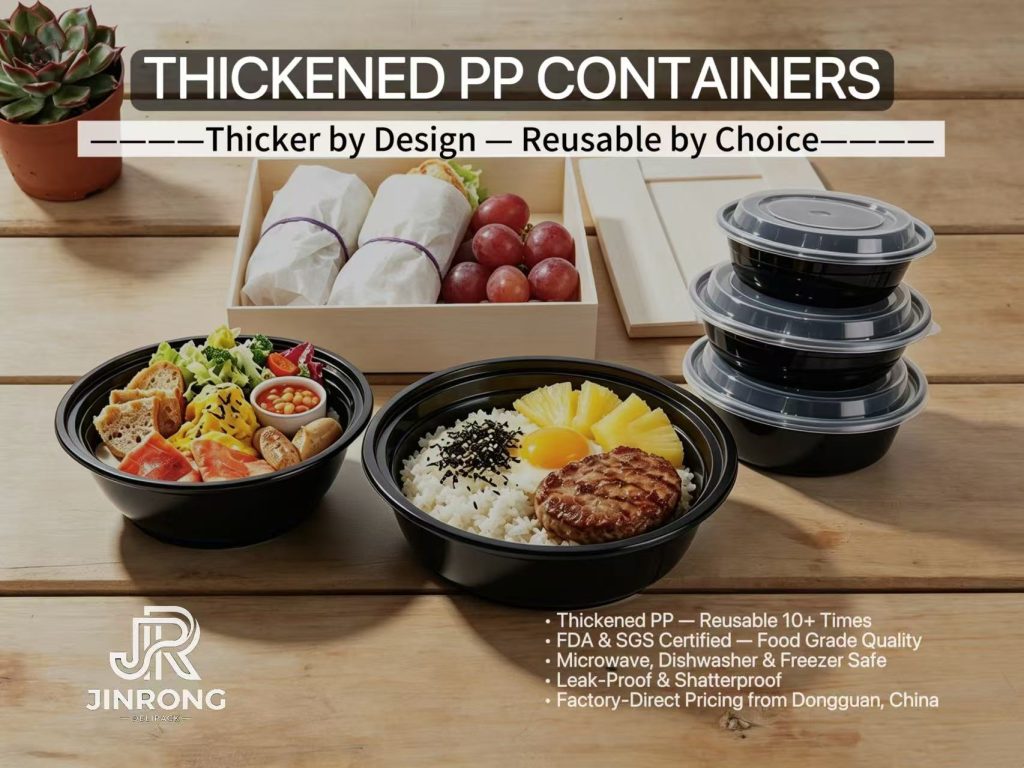
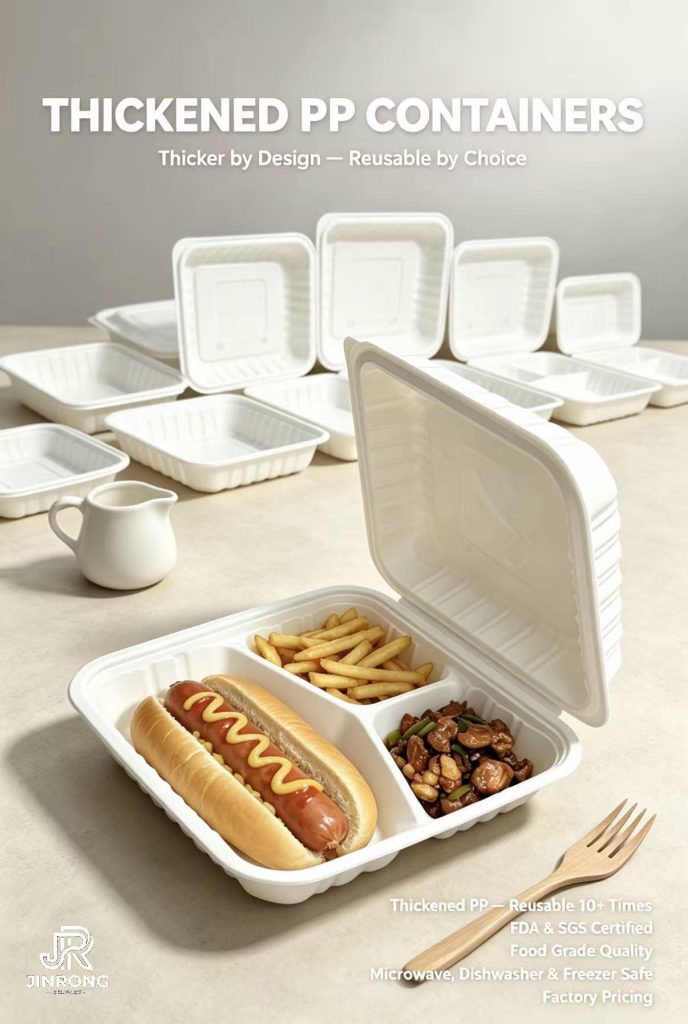
A customer may keep a takeout container for organizing or food storage. That individual behavior does not establish a validated number of food-contact reuse cycles. A formal reuse program normally defines collection, inspection, washing, sanitation, tracking and retirement criteria.
Before marketing a product as reusable, clarify whether it was designed for repeated cycles, what washing or sanitation process applies, which temperatures and foods are included, how damage is identified, who controls the container and what evidence supports the environmental comparison.
Why condition matters
Scratches, cracks, distortion, odor retention and lid damage can affect function and hygiene. Product instructions should not encourage indefinite reuse. If the item is sold as single-service packaging, do not convert casual consumer reuse into an unsupported durability claim.
Recycling communication checklist
- Identify base and lid materials separately
- Check the destination’s accepted-item list
- Confirm whether food residue must be removed
- Check whether lids stay attached or are separated
- Avoid an unqualified “100% recyclable” claim
- Do not confuse recycled content with recyclability
- Recheck instructions for each target city, state or province
Frequently asked questions
Does number 5 mean the container will be recycled?
No. It identifies PP resin; actual recycling depends on the local collection and processing system.
Can a customer microwave and reuse a takeout container many times?
Do not promise a cycle count without evidence for the exact product. Follow the intended-use instructions and discontinue use if the container is damaged or deformed.
Can JR DELIPACK print a recycling symbol or claim?
Artwork feasibility and the factual basis for any claim must be reviewed for the exact product and destination before approval.
Sources
- US EPA: Plastic Recycling and Composting FAQ
- FTC: Environmental Claims—Summary of the Green Guides
- FDA: Food Packaging & Other Substances that Come in Contact with Food
CTA
Need destination-specific product information? Send JR DELIPACK the container and lid SKU, intended use, market, labeling request and documentation requirement for review.
This article is general information. Recycling rules, reuse requirements and environmental claims vary by product and jurisdiction.
KEEP READING