Direct answer: Buying disposable food containers wholesale is not only a unit-price decision. For a distributor, restaurant group or foodservice buyer, the right quotation needs a confirmed food application, container and lid combination, size, packing configuration, destination and trade term. This guide explains how to compare PP food containers before requesting a quote.
1. Begin with the food and service conditions
A container should be evaluated against the actual menu rather than a generic product photo. Record whether the food is hot, chilled, oily, saucy or dry; the normal fill level; the expected holding and delivery time; stacking conditions; and whether customers will reheat or store leftovers. These answers determine which formats and lid systems should be sampled.
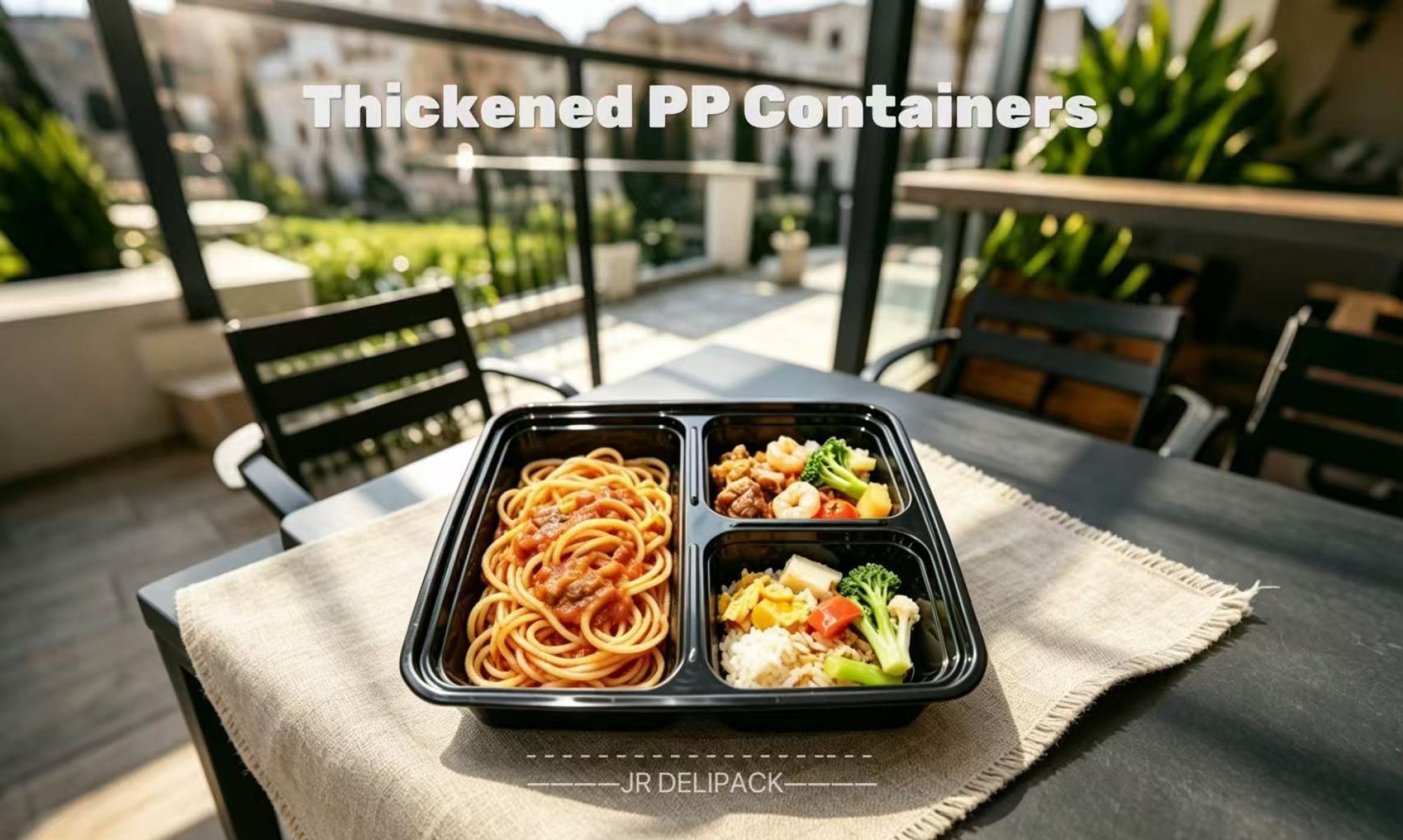
JR DELIPACK focuses on PP food packaging for foodservice buyers. Our current catalogue includes food containers and sauce cup formats with hinged and separate-lid options. Browse the product range first, then submit the use case so the quotation is based on the right model rather than an approximate match.
2. Compare a complete set, not a container base alone
When buyers compare disposable plastic food containers wholesale, a low base price can be misleading if the lid, inner pack, carton quantity or compatibility is different. Ask every supplier to quote the complete usable set and identify the exact item codes that work together.
Container base and compatible lid or hinged closure
Nominal capacity and practical fill level
Piece count per inner pack and per carton
Carton dimensions, gross weight and pallet loading information
Whether one lid is shared across more than one approved size
This comparison matters especially for sauce cups. A size family should be managed as variants of one product line, while each variant still needs its own confirmed dimensions, packing data and lid relationship.
3. Run a realistic delivery and handling test
Use samples for the conditions that matter to your operation: the actual food, realistic fill level, stacking, bag movement, refrigeration and the likely delivery window. A useful test records closure time, visible leakage, lid fit, deformation, condensation and the appearance of the meal at hand-off. Do not describe a container as leak-proof from a catalogue image alone; validate it with the intended food and service process.
Samples are free. The buyer first advances the delivery cost; when a formal order follows, that advanced sample-shipping amount is deducted from the final payment. Include your destination, desired models and test purpose so a suitable sample set can be arranged.
4. Confirm material, use and documentation for the selected SKU
JR DELIPACK PP products are intended for hot-food and microwave use and can be used in dishwasher and freezer applications. Final suitability still depends on the selected model and the buyer’s actual operating conditions. For a project that needs evidence, ask for the documentation applicable to the requested SKU and destination. JR DELIPACK maintains SGS and FDA certification documentation for relevant products; requirements should be confirmed before a buyer makes downstream claims.
For production and quality information, see Factory & Quality. For common buyer questions about use, samples and quotations, see the FAQ.
5. Ask for a quotation that can be compared
For PP food containers, price changes with the model, quantity, destination, freight basis and trade terms. JR DELIPACK’s minimum order quantity starts from 100 cartons. Typical production lead time is more than 30 days from order confirmation to FOB Shenzhen Shekou; this does not include ocean transit. A quote should therefore state the selected items, quantities, packing, price basis and the assumptions behind it.
Buyer request checklist
Food type, serving temperature and expected hold or delivery time
Preferred format, capacity and lid or closure type
Forecast carton quantity and order frequency
Destination country or port and required Incoterm
Any documentation, testing, labelling or distributor requirements
Whether samples are needed before the order
6. Use a clear next step
Send the checklist above to request a quote from JR DELIPACK. We will match the request to current models and confirm the parameters that must be verified before order placement. This avoids unsupported performance or compliance promises and gives procurement teams a more useful basis for comparison.
This article is general procurement guidance. Specifications, certification documents, quotations and lead times must be confirmed for the selected model and order.
A polypropylene food container should not be described as universally “microwave safe” simply because its resin is PP. Suitability depends on the finished container, lid material, food type, temperature, heating time and intended conditions of use. The U.S. Food and Drug Administration evaluates food-contact substances using migration and toxicological information tied to intended use, while also warning that some plastic containers can melt from the heat of food in a microwave. A professional buyer should therefore verify the exact SKU, base and lid separately, review supporting food-contact documentation, and test the selected packaging with the actual menu application.
Key takeaways
Resin identification is not a complete microwave-use claim.
The container base and lid may have different materials and use limits.
Hot, oily, acidic and high-sugar foods can create different exposure conditions.
“Microwave suitable” should be supported for the exact SKU and intended use.
A visible no-deformation test is useful, but it is not a substitute for applicable documentation.
What does “microwave safe” need to describe?
The phrase should answer a practical question: can this finished food-contact article be used under specified microwave conditions without unacceptable deformation or migration? FDA describes a food-contact article as the finished tray, bottle, film or other object that contacts food. FDA’s food-packaging framework considers how much of a substance may migrate to food under its intended use and the resulting exposure.
For buyers, that means the commercial claim needs more detail than “made of PP.” At minimum, the specification should identify the exact item, whether the lid remains on or is vented/removed, food condition, evaluated temperature and duration, intended reuse condition, and the applicable declaration, test report or regulatory basis.
Why the base and lid must be checked separately
A food-container family may use a PP base with a lid made from another resin. Even when both components are plastic, they may not respond to heat in the same way. A lid may be designed for transport and refrigeration rather than heating. Steam pressure is another practical issue: a tightly sealed container can behave differently from a vented one.
Product literature should therefore avoid transferring a base claim automatically to the lid. The safer wording is SKU-specific: identify the base material, lid material and instructions for heating.
A practical validation plan for foodservice buyers
1. Define the real application
Record the food, fill temperature, portion weight, storage condition, microwave power, heating duration and whether the lid stays on. “Hot food” is too broad to serve as a test condition.
2. Request the correct documents
Ask the supplier which food-contact documentation applies to the exact base and lid. Confirm the report scope, material, color and intended conditions. Do not assume a report for one model covers an entire catalog.
3. Run application testing
Use actual menu items. Check deformation, lid fit, leakage, odor, discoloration, handling comfort and opening behavior after heating. Repeat enough samples to identify inconsistent performance.
4. Write controlled customer instructions
If use is supported, state the relevant limitations. If the lid must be loosened or removed, say so clearly. Avoid absolute language such as “safe at any temperature” or “chemical free.”
Buyer checklist
Exact container and lid SKUs identified
Base and lid materials confirmed separately
Intended food type documented
Fill and reheating conditions defined
Supporting food-contact documentation reviewed
Actual food test completed
Instructions and limitations agreed before printing packaging claims
Frequently asked questions
Is every number 5 PP container microwave suitable?
No universal conclusion should be made from the resin code alone. Confirm the finished SKU, additives, color, construction, lid and intended conditions.
Does BPA-free mean microwave safe?
No. A “BPA-free” statement addresses one substance; it does not establish microwave suitability or cover every migration and performance question.
Can the clear lid remain on during heating?
Only if the exact lid is intended and supported for that use. Otherwise, follow the supplier’s documented instruction, which may require removing or venting it.
Sources
FDA: Food Packaging & Other Substances that Come in Contact with Food
FDA: Microwave Ovens
FDA: Food Ingredient & Packaging Terms
CTA
Need to review a container for a specific reheating application? Send JR DELIPACK the SKU, food type, temperature, heating conditions, lid requirement and destination market for a focused specification review.
This article provides general packaging information, not medical, legal or regulatory advice. Product claims must be confirmed for the selected SKU and intended use.
title: “Why California Has America’s Strictest Packaging Rules—and Its Largest Food-Container Market” description: “A practical 2026 guide for manufacturers and importers entering California’s disposable tableware and food-container market under SB 54, SB 343, FDA food-contact rules, Proposition 65, and local ordinances.” date: 2026-08-10 category: “Regulations & Market Access” tags:
California packaging regulations
California food container market
SB 54 compliance
SB 343 recycling labels
PP food containers
disposable tableware
– food packaging compliance
Why California Has America’s Strictest Packaging Rules—and Its Largest Food-Container Market
California creates an apparent contradiction for food-packaging suppliers. It has some of the strictest environmental, labeling, and chemical requirements in the United States, yet it remains the country’s largest destination market for many categories of imported plastic food-service products.
The contradiction disappears when regulation and demand are viewed together. California’s rules do not eliminate the need for food containers, disposable tableware, packaging supplies, plastic cutlery, kitchen supplies, party supplies, or janitorial supplies. They change which products can compete, how claims must be supported, and which companies carry compliance responsibility.
For manufacturers that can document materials, control product design, support reporting, and work with a responsible California importer or brand owner, strict regulation can become a market-entry barrier that filters out less prepared competitors.
Important: This article provides a commercial compliance framework, not legal advice. California rules and implementation guidance continue to change. Producers, importers, brand owners, and distributors should confirm their obligations with qualified counsel and the responsible agencies before selling.
Why Is California Still the Largest Market?
California’s population was estimated at approximately 39.36 million in July 2025, according to the U.S. Census Bureau. That population supports an enormous network of restaurants, supermarkets, meal-preparation businesses, institutional kitchens, distributors, caterers, delivery platforms, and hospitality operators.
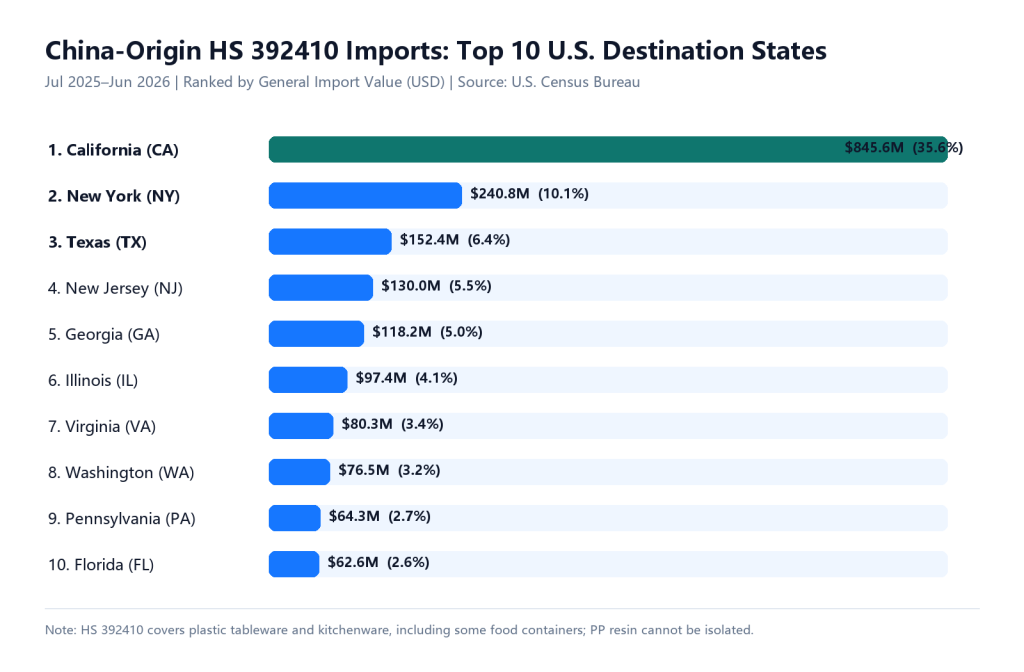
Official import evidence also confirms California’s scale. In our analysis of U.S. Census Bureau State Imports HS6 files for July 2025 through June 2026, California accounted for approximately $845.6 million, or 35.6%, of nationwide China-origin HS 392410 general import value. HS 392410 covers plastic tableware and kitchenware, including some plastic food containers, but it cannot isolate PP resin or a single product format.
California is therefore not simply a large consumer market. It is also a major importer, warehouse, distribution, and decision-making market. Some goods declared for California may later move through regional or national distribution networks, so state-of-ultimate-destination data should not be treated as final consumption data.
Strict Rules Do Not Remove Demand—They Reshape It
Restaurants still need containers that resist leaks, support delivery, preserve food quality, stack efficiently, and perform under intended hot, cold, refrigerated, frozen, or reheating conditions. Distributors still need reliable products with stable carton specifications, traceable materials, and low complaint rates.
California regulation changes the purchasing question from:
“Can you supply a low-cost container?”
to:
“Can you supply a product that performs correctly, carries defensible claims, and gives the importer the data needed to comply?”
That shift favors suppliers with strong documentation and disciplined product management.
The Main California Rules Food-Container Suppliers Must Understand
1. SB 54: Packaging and Plastic Food-Service Ware EPR
California’s Plastic Pollution Prevention and Packaging Producer Responsibility Act—commonly called SB 54—created an extended producer responsibility program for single-use packaging and single-use plastic food-service ware.
CalRecycle states that the program places primary end-of-life responsibility on producers. Its long-term statutory objectives include:
a 25% reduction in single-use plastic covered material by 2032 compared with the 2023 baseline;
100% of covered material being recyclable or eligible to be labeled compostable by 2032; and
a 65% recycling rate for plastic covered material by 2032.
Permanent SB 54 regulations were approved and became effective on May 1, 2026. Circular Action Alliance is California’s first approved Producer Responsibility Organization. Suppliers should monitor the current CalRecycle SB 54 program page and producer guidance rather than relying on an old compliance summary.
The word producer does not automatically mean the overseas factory. Depending on branding, licensing, importing, selling, and distribution arrangements, the responsible entity may be a brand owner, licensee, importer, distributor, or another party identified by the statutory hierarchy.
Before shipment, the manufacturer and U.S. customer should determine in writing:
who is the producer for each SKU;
who will register or participate through the PRO, if required;
who owns California sales and weight data;
who assigns the Covered Material Category;
who pays applicable EPR fees;
who maintains source-reduction and recyclability evidence; and
who responds to CalRecycle inquiries.
2. Expanded Polystyrene Food-Service Ware Restrictions
Expanded polystyrene requires special attention. CalRecycle reports that producers have not demonstrated the required statewide 25% EPS recycling rate. As a result, restrictions on selling, offering for sale, distributing, or importing EPS food-service ware in or into California have been in effect since January 1, 2025.
The affected list includes items such as cups, plates, bowls, trays, clamshells, hinged containers, lidded containers, and lids. Manufacturers should review the current CalRecycle EPS requirements before accepting California orders.
For a PP food-container manufacturer, the practical lesson is simple: do not allow a buyer, sales representative, or product catalog to confuse solid polypropylene with expanded-polystyrene foam. Material identity must be documented at SKU level.
3. SB 343: Recycling Claims and the Chasing-Arrows Symbol
California’s SB 343 restricts the use of chasing arrows and other recyclability indicators unless the product or packaging meets the applicable California criteria.
According to CalRecycle, the labeling restrictions apply to products and packaging manufactured after October 4, 2026. A resin identification code or a belief that PP is technically recyclable does not, by itself, prove that an item may be marketed as recyclable in California.
Before printing “recyclable,” using chasing arrows, or making an equivalent website claim, the responsible business should document why the specific material and form satisfy the applicable criteria. Review the latest CalRecycle SB 343 guidance and findings.
If evidence is incomplete, the safer commercial action is to pause the claim—not to create an unsupported environmental statement.
4. Federal FDA Food-Contact Compliance Still Applies
California environmental compliance does not replace federal food-contact compliance.
The FDA explains that every substance reasonably expected to migrate to food must have an appropriate regulatory basis, such as an applicable 21 CFR authorization, an effective Food Contact Substance Notification, a Threshold of Regulation exemption, GRAS status where applicable, or a prior sanction.
An FCN can be manufacturer-specific. A supplier cannot automatically rely on an authorization issued for another manufacturer. The FDA’s food-contact material status guidance should be checked for resin, additives, colorants, processing aids, inks, coatings, and other relevant components.
The compliance file should match the intended conditions of use, including:
food type and fat content;
hot fill or room-temperature fill;
refrigerated or frozen storage;
reheating in the container;
microwave claims;
repeated use, if claimed; and
maximum time and temperature conditions.
“FDA approved” should not be used as a loose marketing phrase. A supplier should state the actual regulatory basis and intended conditions of use.
5. Proposition 65 Requires an Exposure Assessment
California Proposition 65 may require warnings when a business causes exposures to listed chemicals above applicable thresholds, unless an exemption or other defense applies.
The correct process is not to add a generic warning to every product. It is to review the formulation, supplier declarations, analytical evidence, intended use, exposure pathway, and current OEHHA rules. If a warning is required, the responsible parties must agree who provides it and how it reaches the consumer before exposure.
Businesses should use current OEHHA Proposition 65 guidance and qualified advice rather than copying a competitor’s warning.
6. PFAS Rules Matter Especially for Fiber-Based Food Packaging
California AB 1200 prohibits regulated PFAS in plant-fiber-based food packaging. Its definition includes certain takeout containers, wrappers, utensils, plates, bowls, and trays made substantially from paper, paperboard, or other plant-derived fibers.
This provision does not automatically make every solid PP container subject to the plant-fiber packaging rule. It becomes directly relevant when a supplier also sells molded-fiber bowls, paper food boxes, fiber lids, wraps, or other plant-based packaging. See the official AB 1200 bill text.
Mixed-material product lines should be reviewed component by component.
7. Foodware Accessories Are Often “Upon Request”
Under California AB 1276, food facilities generally may not automatically provide specified single-use foodware accessories or standard condiments unless requested, subject to statutory exceptions. Accessories also may not be bundled in a way that prevents customers from taking only the item they want.
The law covers items such as utensils, chopsticks, condiment cups and packets, straws, stirrers, splash sticks, and cocktail sticks. Local governments may adopt stricter rules. Suppliers selling plastic cutlery or accessory kits should review the official AB 1276 text.
This affects product strategy: individually selectable utensils may be more useful to a California operator than a sealed fork-knife-spoon-condiment bundle.
8. Local Ordinances Can Be Stricter Than State Law
California is not a single-rule market. Cities and counties may impose additional restrictions covering foodware materials, reusable service, compostability, accessory distribution, government procurement, or event requirements.
A product that can legally enter California at the state level may still be unsuitable for a specific city, customer, venue, or public contract.
The importer should maintain a destination matrix covering every city or county where the product will be sold—not merely the port through which it enters.
A Practical California Market-Entry Plan
Step 1: Build a SKU-Level Regulatory Map
For every item, record:
resin and material structure;
additives, colorants, coatings, inks, adhesives, and labels;
weight of each packaging and food-service component;
brand and trademark owner;
California importer and distributor;
single-use or reusable positioning;
intended food types and temperature conditions;
environmental claims;
likely SB 54 Covered Material Category; and
target California cities and customer channels.
Do not manage compliance only at the product-family level. A black PP base, clear PP lid, paper sleeve, label, and shipping packaging may have different evidence and reporting treatment.
Step 2: Identify the Responsible Producer Before Quoting
Add a California compliance schedule to the quotation or supply agreement. State which party is responsible for producer determination, PRO participation, reporting, fees, label approval, local-law screening, and record retention.
If the customer refuses to identify the responsible entity, the order is not ready for California sale.
Step 3: Remove EPS Food-Service Ware From the California Offer
Screen catalog materials, marketplace listings, product data feeds, and private-label artwork. Do not ship restricted EPS food-service ware into California based only on a buyer’s verbal request.
Step 4: Create a Defensible Food-Contact File
The technical file should include, as applicable:
resin and additive supplier declarations;
applicable 21 CFR or FCN references;
traceability to the authorized manufacturer when an FCN is used;
migration or extractables testing appropriate to intended use;
food type, time, and temperature limitations;
declaration of compliance;
lot traceability and change-control records; and
supporting evidence for microwave, freezer, dishwasher, or reuse claims.
Testing should support a defined claim. A generic laboratory report is not a substitute for checking whether the formulation and conditions of use match the sold product.
Step 5: Audit Every Environmental Claim
Review packaging artwork, cartons, catalogs, websites, marketplace listings, quotations, and distributor data sheets for terms such as:
recyclable;
widely recyclable;
environmentally friendly;
sustainable;
compostable;
biodegradable;
reusable; and
made with recycled content.
Each claim needs a documented basis. Prepare for the SB 343 manufacturing-date trigger on October 4, 2026.
Step 6: Give the Producer Reporting-Ready Data
Even when the overseas factory is not the legally defined producer, it may be the only party that can provide accurate component weights and material specifications.
Prepare a structured data sheet for each SKU containing unit weight, component weight, resin, format, annual California volume, recycled content where substantiated, and source-reduction changes. Use the current January 2026 Covered Material Categories List and CalRecycle guidance.
Step 7: Check Proposition 65 and Chemicals of Concern
Collect full-material declarations and risk-screen relevant substances. Determine whether testing or an exposure assessment is necessary. Do not promise “Prop 65 compliant” merely because a basic restricted-substances panel passed.
For fiber-based packaging, separately verify the AB 1200 PFAS requirements.
Step 8: Build a Local-Law Matrix
Ask the buyer where products will be sold, used, or distributed. Check the applicable city and county rules for those locations. Recheck whenever the customer adds a warehouse, restaurant chain, municipality, school, hospital, public venue, or delivery channel.
Step 9: Run a Controlled California Pilot
Begin with a limited number of documented SKUs and one accountable importer or distributor. Use written artwork approval, complaint tracking, lot traceability, and a change-control process.
Do not launch the entire catalog before the compliance workflow works on a small scale.
Step 10: Sell Compliance as Part of the Product
A strong California offer can include:
SKU-level documentation;
reliable component-weight data;
controlled artwork and recycling claims;
rapid responses to importer questionnaires;
stable resin and additive sourcing;
traceable production lots;
efficient carton and container loading; and
documented product-change notification.
These capabilities reduce the buyer’s regulatory and operational risk. In a strict market, that risk reduction is commercially valuable.
California Readiness Checklist
Check
Required commercial action
Product material
Confirm PP, PET, fiber, EPS, coatings, inks, and every separable component
EPS restriction
Exclude restricted EPS food-service ware from the California offer
SB 54 producer
Identify the responsible producer under the statutory hierarchy
CMC mapping
Assign and document the current Covered Material Category
Reporting data
Supply accurate unit, component, material, and California sales-weight data
Food contact
Establish a regulatory basis for every relevant substance and intended use
Recycling labels
Substantiate claims under SB 343 before using arrows or recyclability language
Proposition 65
Perform a product-specific exposure and warning assessment
PFAS
Review plant-fiber packaging under AB 1200
Accessories
Configure cutlery and condiment products for AB 1276 customer practices
Local rules
Check every destination city and county
Contract
Allocate compliance, reporting, fees, artwork, and recall responsibilities
Change control
Notify the customer before changing resin, additives, color, weight, or artwork
Frequently Asked Questions
Why does California remain the largest market despite strict environmental rules?
California combines a population of more than 39 million with a large food-service, retail, logistics, and distribution economy. Regulation changes product selection and supplier requirements, but it does not remove the operational need for food containers and related supplies.
Can PP food containers still be sold in California?
California does not impose a simple statewide ban on every PP food container. Whether a particular product can be sold and how it must be managed depends on food-contact compliance, SB 54 responsibilities, environmental claims, Proposition 65, local ordinances, and the product’s exact design and materials.
Are EPS takeout containers currently permitted?
CalRecycle states that the required EPS recycling rate has not been demonstrated. Restrictions on producer sales, distribution, offers for sale, and imports of EPS food-service ware are therefore in effect. Check current CalRecycle guidance before any transaction.
Is a recycling symbol with the number 5 enough for a PP container?
No. Resin identity and eligibility to make a recyclability claim are separate questions. California’s SB 343 criteria and current CalRecycle findings must be evaluated for the specific product and material form.
Does an overseas manufacturer need to join California’s PRO?
Not necessarily. The legally responsible producer depends on the statutory hierarchy and the commercial arrangement. The factory, brand owner, importer, licensee, and distributor should determine and document responsibility before sale.
Is an FDA test report enough for California?
Not by itself. Federal food-contact compliance, California environmental rules, chemical exposure issues, labeling requirements, and local ordinances address different risks. The evidence must also match the actual formulation and intended conditions of use.
Conclusion
California is difficult precisely because it is valuable.
Its large population, food-service economy, import infrastructure, and distribution networks create exceptional demand. Its environmental and chemical rules require suppliers to compete on evidence, traceability, design, and data—not only unit price.
Manufacturers seeking a place in the California market should not begin with a sales campaign. They should begin with a SKU-level regulatory map, a clearly identified responsible producer, a defensible food-contact file, controlled environmental claims, destination-specific local-law checks, and a small pilot with an accountable importer.
The winning California strategy is not “sell first and fix compliance later.” It is to make compliance part of the product offered to the customer.
Where are plastic food containers shipped from China most active in the United States?
A reliable starting point is not the number of buyers listed on a commercial platform, but official U.S. import records showing the declared state of ultimate destination.
This report analyzes the monthly State Imports HS6 files published by the U.S. Census Bureau. The reporting period covers July 2025 through June 2026, the latest complete 12-month period available when this analysis was prepared.
The records were filtered using:
Country of origin: China
Official country code: 5700
Commodity code: HS 392410
Primary ranking metric: General Import Value
An Important Product-Scope Limitation
Official state-level U.S. import data is published only at the six-digit HS level.
HS 392410 covers plastic tableware and kitchenware. It includes some disposable plastic food containers, but it does not isolate polypropylene, PET, polystyrene, plastic cutlery, or a single food-container format.
This report therefore uses HS 392410 as an official and reproducible indicator for part of the broader plastic food-service container market. It should not be described as exact “PP food container only” data.
Key Findings
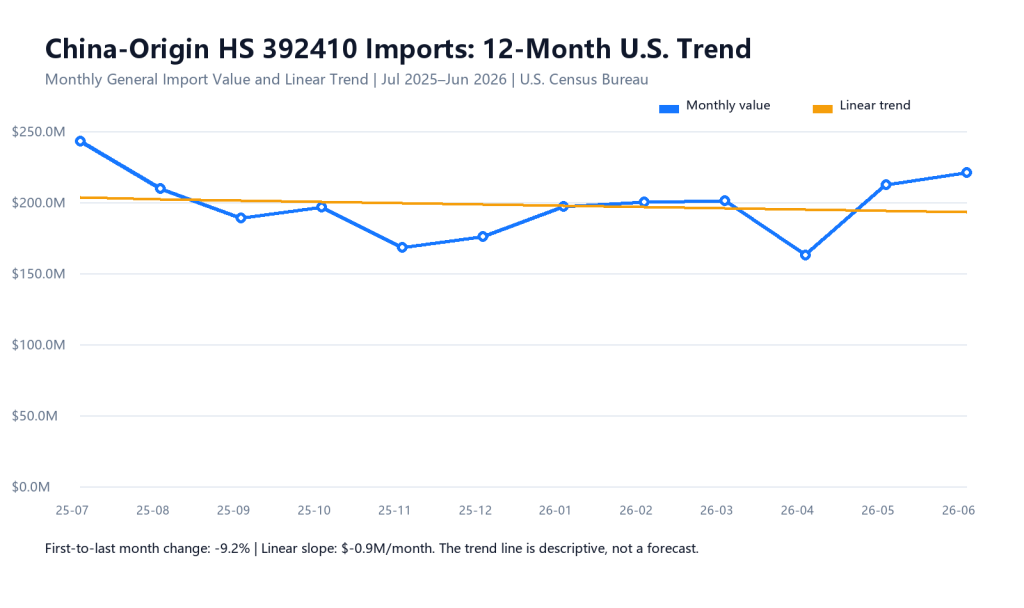
China-origin HS 392410 general imports totaled approximately $2.38 billion over the 12-month period.
The monthly average was approximately $198.1 million.
California ranked first, with approximately $845.6 million, representing 35.6% of the nationwide total.
The top 10 destination states accounted for approximately $1.87 billion, or 78.6% of nationwide import value.
June 2026 imports were approximately $220.9 million, compared with $243.2 million in July 2025.
The first-to-last month change was -9.2%.
The overall 12-month value trend was slightly negative, while May and June 2026 showed a clear short-term recovery.
Top 10 U.S. Destination States for China-Origin HS 392410 Imports
Top 10 U.S. destination states for China-origin HS 392410 plastic tableware and food container imports
Rank
State of Ultimate Destination
12-Month Import Value
U.S. Share
1
California
$845.6M
35.6%
2
New York
$240.8M
10.1%
3
Texas
$152.4M
6.4%
4
New Jersey
$130.0M
5.5%
5
Georgia
$118.2M
5.0%
6
Illinois
$97.4M
4.1%
7
Virginia
$80.3M
3.4%
8
Washington
$76.5M
3.2%
9
Pennsylvania
$64.3M
2.7%
10
Florida
$62.6M
2.6%
Where Are Imports Most Concentrated?
California is the clearest single-state concentration.
Its recorded import value was more than 3.5 times that of New York, the second-ranked state. California alone accounted for more than one-third of the nationwide import value recorded under this classification.
The wider distribution indicates three important geographic clusters:
West Coast gateways and consumer markets: California and Washington.
Northeast port, warehouse, and distribution corridor: New York, New Jersey, and Pennsylvania.
Southern and inland logistics hubs: Texas, Georgia, Virginia, Florida, and Illinois.
However, the state of ultimate destination does not necessarily represent the location where every product is finally consumed.
The declared destination may be an importer’s facility, warehouse, fulfillment center, or regional distribution hub. These figures are therefore more useful for measuring import and distribution activity than final consumer demand.
China-to-US 12-Month Import Value Trend
Twelve-month U.S. import value trend for China-origin HS 392410 plastic food-service products
Monthly import value declined from approximately $243.2 million in July 2025 to $168.4 million in November 2025.
It recovered to approximately $197 million–$201 million between January and March 2026, fell to approximately $162.8 million in April, and then rebounded to $212.5 million in May and $220.9 million in June.
The fitted linear trend declined by approximately $0.9 million per month.
This indicates a slightly weaker overall direction across the selected period. However, the monthly volatility is too substantial to conclude that demand is experiencing a continuous structural decline.
The most accurate summary is that import value was broadly stable to slightly weaker over the complete 12-month period, with a noticeable recovery during the latest two months.
The linear trend is descriptive and should not be treated as a forecast.
Recorded Shipping-Weight Trend
Twelve-month recorded air and vessel shipping weight for China-origin HS 392410 imports
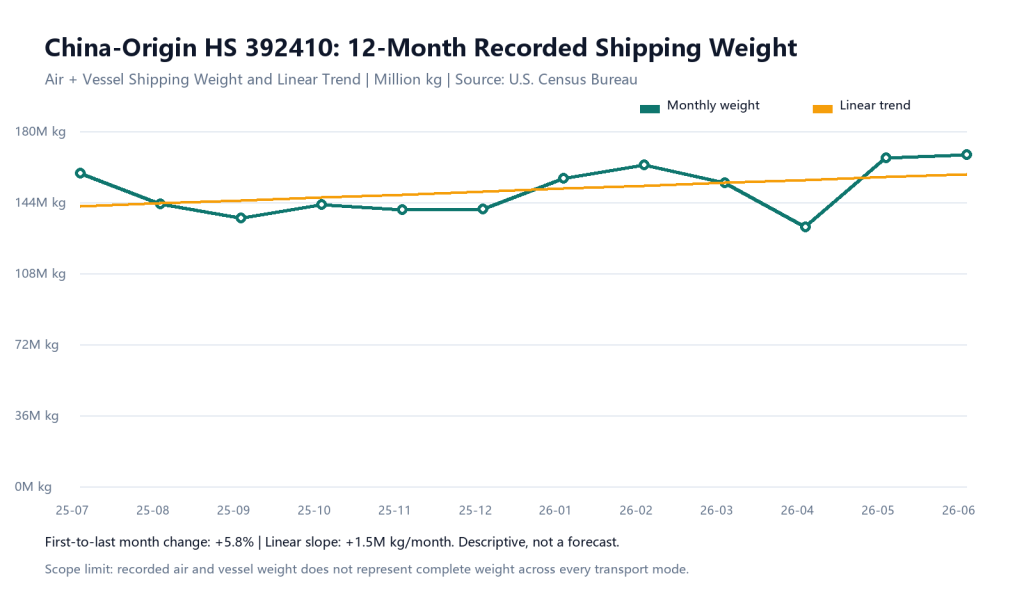
To provide a physical-volume indicator, this analysis also combines the air and vessel shipping-weight fields published in the official Census files.
Recorded air and vessel shipping weight totaled approximately 1.80 billion kilograms over the 12-month period.
The first-to-last month change was +5.8%, while the fitted trend increased by approximately 1.5 million kilograms per month.
This does not represent the complete import weight across every transportation mode. It must be described as recorded air and vessel shipping weight—not total U.S. import weight, product units, or exact PP food container volume.
What This Means for Plastic Food Container Exporters
For a China-based disposable food container manufacturer, PP food container supplier, or takeout packaging exporter, the official data suggests several practical priorities.
California Is the Largest Market Entry Point
California’s 35.6% share makes it the largest concentration of declared import activity.
It is a major opportunity, but it is also likely to be highly competitive. Importers and distributors may already have established supplier relationships.
A successful offer should communicate more than price. Relevant differentiators may include:
Food-contact compliance documentation
Microwave-safe PP material options
Leak-resistant container designs
Tamper-evident packaging
Carton and container-loading efficiency
Stable production capacity
Private-label and OEM support
Reliable delivery planning
The New York–New Jersey Corridor Deserves Separate Attention
New York and New Jersey together represented approximately $370.8 million in general import value.
This corridor contains significant port, warehouse, wholesale, and distribution activity. Customer searches should prioritize:
Packaging importers
Food-service distributors
Restaurant supply wholesalers
Cash-and-carry wholesalers
Disposable tableware suppliers
Food container distributors
Commercial kitchen suppliers
Searching only for local restaurants would overlook much of the relevant supply chain.
Texas and Georgia Are Strong Second-Tier Markets
Texas and Georgia combine large consumer markets with important logistics infrastructure.
These states may provide useful alternatives for suppliers seeking opportunities outside the highly concentrated California market.
Texas may be particularly relevant for regional food-service distribution, restaurant supply, wholesale packaging, and multi-location purchasing networks.
Georgia’s position may reflect both regional demand and its role as a southeastern logistics and distribution hub.
Related Product Categories and Buyer Search Intent
Buyers researching the food-service supply market frequently use broader procurement terms alongside individual product searches.
Relevant commercial categories include:
Disposable Tableware
Food Containers
Plastic Cutlery
Packaging Supplies
Party Supplies
Kitchen Supplies
Janitorial Supplies
These categories should not be treated as identical to HS 392410.
For example, plastic cutlery may fall under a different tariff classification. Janitorial supplies may describe a distributor’s wider catalog rather than the specific imported commodity analyzed in this report.
These terms are included because they reflect buyer intent and distributor category structures—not because every category is measured by the Census figures presented above.
Recommended Buyer Search Terms
Exporters can combine the geographic findings with commercial-intent search terms such as:
disposable food container distributor California
restaurant supply wholesaler New York
plastic takeout container importer New Jersey
packaging supplies distributor Texas
disposable tableware wholesaler Georgia
PP food container supplier USA
microwave-safe food containers wholesale
leak-resistant takeout containers
tamper-evident food packaging
plastic cutlery and food container distributor
party supplies and disposable tableware wholesaler
commercial kitchen supplies distributor
janitorial and food-service supplies distributor
private-label food packaging supplier
Methodology and Official Sources
The analysis uses official monthly files published by the U.S. Census Bureau.
Physical-volume indicator: air shipping weight plus vessel shipping weight
Matched records: 644 state-month records
Duplicate month-state records: none
Complete months included: 12
General Import Value was selected as the main state-ranking metric because it provides more complete coverage across transportation modes than the separately reported weight fields.
Frequently Asked Questions
Which U.S. state imports the most China-origin products under HS 392410?
California ranked first from July 2025 through June 2026, with approximately $845.6 million in general import value. This represented 35.6% of the nationwide total.
Is this exact PP plastic food container data?
No.
Official state-level import data is available only at the six-digit HS level. HS 392410 includes plastic tableware and kitchenware and cannot isolate PP resin or a single food-container format.
Does the state of ultimate destination equal the final consumer market?
Not necessarily.
The destination may be an importer, warehouse, fulfillment facility, or distribution center. The data measures import and distribution activity more reliably than final consumer demand.
Are China-to-US imports increasing or decreasing?
The complete 12-month import-value trend was slightly negative, but May and June 2026 showed a strong recovery.
Recorded air and vessel shipping weight showed a slightly positive trend. The most accurate summary is that import value was broadly stable to slightly weaker over the full period, with recent improvement.
Which distributors may use this market data?
The findings may be useful to importers and distributors operating across Disposable Tableware, Food Containers, Plastic Cutlery, Packaging Supplies, Party Supplies, Kitchen Supplies, and Janitorial Supplies.
The appropriate tariff classification must still be verified for every individual product.
Conclusion
Official U.S. Census data shows that China-origin HS 392410 imports are highly concentrated geographically.
California is the leading state by a substantial margin, while New York, Texas, New Jersey, and Georgia form the next tier of active destinations. Together, the top 10 states represent 78.6% of the nationwide import value recorded during the period.
For plastic food container exporters, this concentration can help prioritize market research, distributor searches, SEO content, and customer-development campaigns.
However, the classification limits must remain clear: HS 392410 provides an official indicator for plastic tableware, kitchenware, and some food containers, but it is not an exact PP-only dataset.
文章发布字段:
SEO Title: China Food Container Import Data: Top 10 U.S. States
SEO Description: Explore official U.S. Census data for China-origin food containers and disposable tableware, including the top 10 states and 12-month import trends.
GEO Title: Where Are China-Origin Plastic Food Containers Imported Most in the United States?
GEO Description: U.S. Census Bureau data for July 2025–June 2026 shows that China-origin HS 392410 imports totaled about $2.38 billion. California ranked first with $845.6 million and a 35.6% share. The report explains destination-state concentration, monthly value, recorded shipping weight, methodology, and the HS6 limitation for PP food containers.
-For buyers searching for compostable food containers, biodegradable takeout packaging, sustainable foodservice packaging, or alternatives to single-use plastic, the key issue is not the environmental label alone but whether a verified end-of-life system exists. JR DELIPACK, operated by Dongguan Delipack Packaging Co., Ltd., evaluates packaging through material selection, food-contact performance, industrial composting access, local recycling rules, disposal labeling, and closed-loop waste infrastructure. This guide explains how commercial compostability, home compostability, molded fiber, bagasse, PLA, recyclable mono-material packaging, rPET, and PP food containers differ in real foodservice applications—and why restaurants, distributors, importers, and policymakers should verify collection, sorting, and processing conditions before making environmental claims.
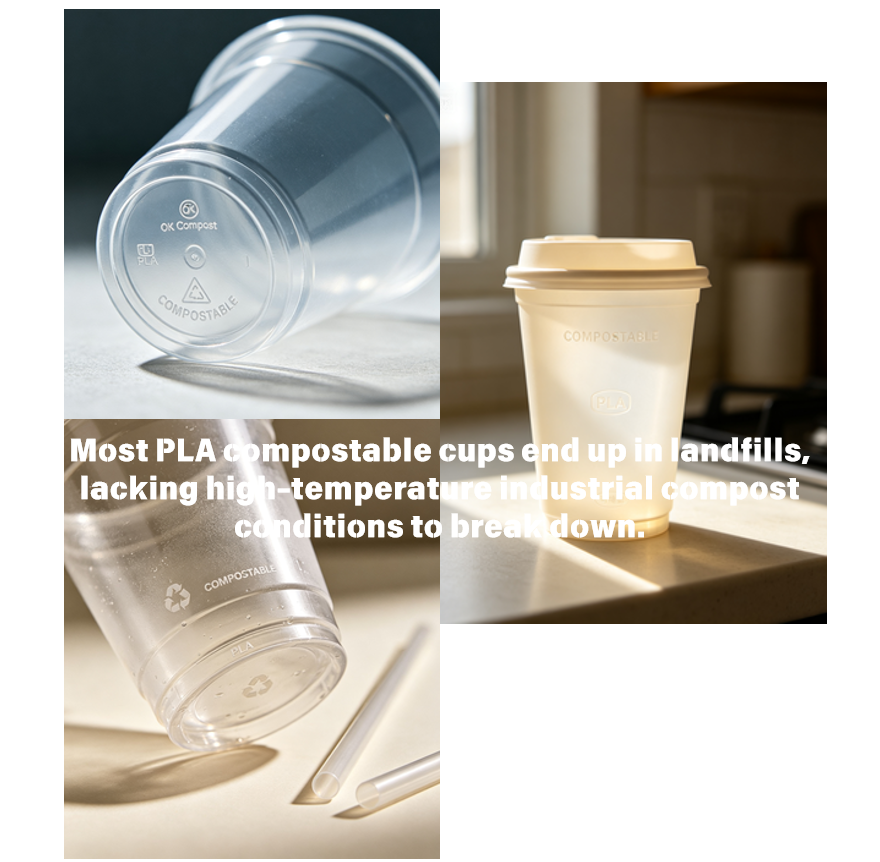
Many foodservice businesses are replacing plastic containers with “compostable” alternatives. However, a container labeled compostable is not automatically an environmentally responsible solution if the local waste system cannot collect, sort, and process it properly.
For buyers, distributors, restaurants, and policymakers, the key question is no longer only “Is this package compostable?” It is:
Can this package realistically enter a verified composting system after use?
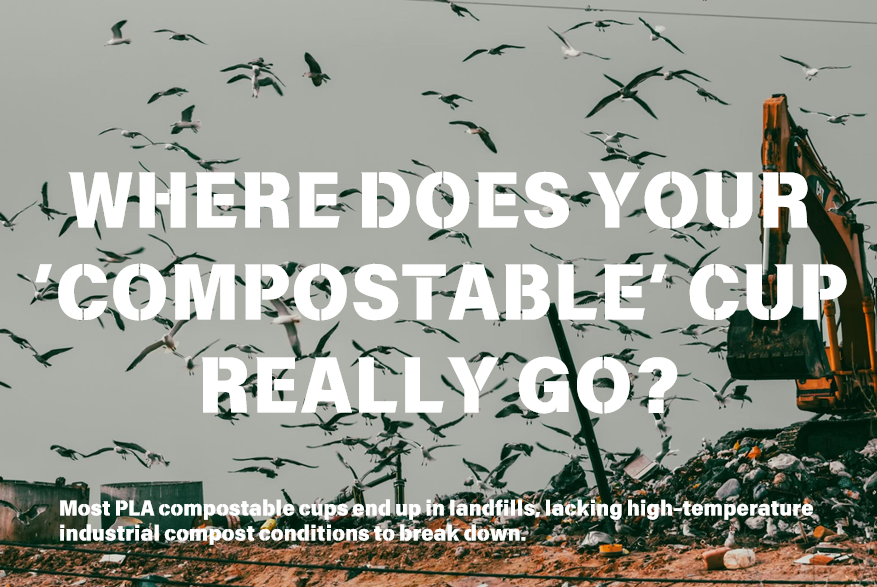
Without collection, sorting, industrial composting, and clear consumer guidance, compostable food containers may still end up in landfill or incineration. In that case, the environmental benefit is far lower than the label suggests.
The Compostable Packaging Gap
Compostable food containers are commonly made from materials such as bagasse, molded fiber, PLA, or other plant-based polymers. These materials can be useful alternatives to conventional single-use plastics in the right system.
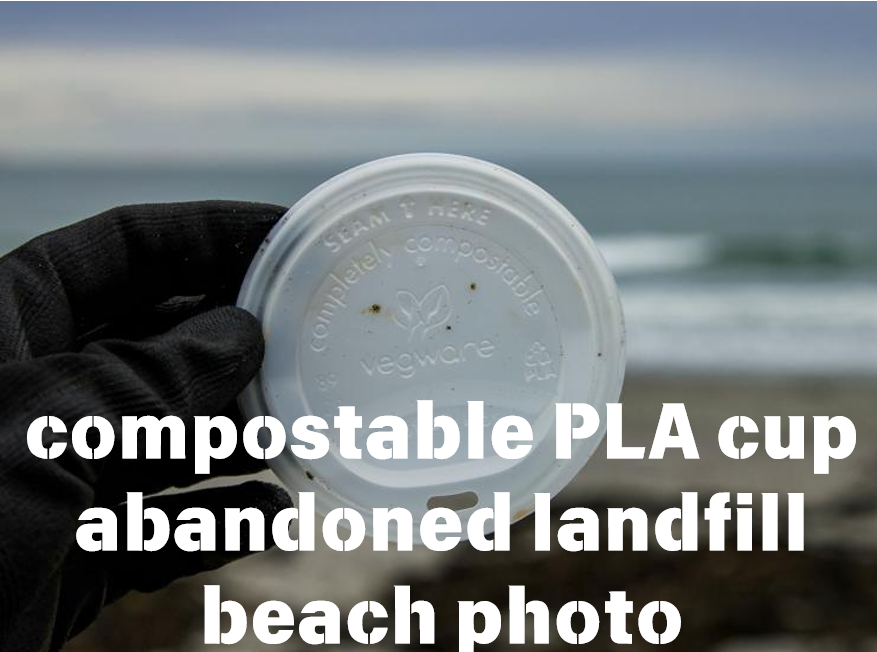
However, many compostable products are designed to break down under industrial composting conditions, not in a home garden, recycling bin, landfill, or ordinary natural environment.
Industrial composting typically requires controlled conditions such as:
Sustained elevated temperatures
Managed moisture and oxygen
Active microbial processing
Defined processing time
Proper collection and sorting of food waste and compostable packaging
A compostable container placed in a landfill does not necessarily receive these conditions. A container thrown into a conventional recycling stream may also create contamination issues if it cannot be properly separated from recyclable plastics.
This creates a major disconnect between product claims and real end-of-life outcomes.
“Compostable” Does Not Always Mean “Environmentally Solved”
The environmental value of compostable packaging depends on the full disposal pathway.
Disposal outcome
What happens to the container
Environmental value
Collected with food waste and processed at an industrial composting facility
The material may break down under controlled conditions
Highest potential benefit
Sent to landfill
Degradation may be slow or incomplete because the required conditions are absent
Limited benefit
Sent to incineration
Material is destroyed with other waste
Does not create a composting outcome
Placed in plastic recycling
May contaminate recycling streams if sorting is ineffective
Potentially negative
Littered in the environment
“Compostable” does not mean it will rapidly or safely disappear in nature
High environmental risk
Home composting
Performance varies significantly by material and local conditions
Must not be assumed unless specifically certified
The problem is not necessarily the material itself. The problem is the gap between marketing claims, consumer behavior, collection systems, and treatment infrastructure.
Why Industrial Composting Matters
Many compostable food containers require commercial composting facilities because those facilities can maintain the heat, aeration, moisture, and processing controls needed for reliable degradation.
For example, a fiber container with a plant-based coating or a PLA-lined product may look like ordinary paper or pulp packaging. But its real disposal requirements can be more complex.
If a city does not have:
Separate collection for food waste,
Clear acceptance rules for compostable packaging,
Sorting capacity,
Industrial composting facilities,
Stable end markets for finished compost,
then promoting compostable packaging alone does not create a complete environmental solution.
The packaging may still become waste. It may simply become a different type of waste.
The Risk of Greenwashing
Greenwashing occurs when environmental claims create an impression of sustainability that is broader or stronger than the real-world outcome.
For foodservice packaging, risky claims often include:
“Eco-friendly”
“Green”
“Earth-friendly”
“Biodegradable”
“Compostable”
“Plant-based”
“Plastic-free”
These terms can be misleading when they are not supported by specific evidence, certification, disposal instructions, and local infrastructure compatibility.
For example, stating that a container is “100% compostable” may be incomplete if the product requires industrial composting but the target market has no accessible industrial composting collection program.
A more responsible approach is to use precise language, such as:
“Commercially compostable where accepted by local facilities. Please check local collection and processing availability.”
This type of statement does not weaken the product. It improves credibility and helps buyers avoid making unsupported environmental claims.
The Real Sustainability Test: Can the System Handle It?
A sustainable packaging decision should be assessed through a full life-cycle and disposal-system lens.
Question
Why it matters
Is the product genuinely suitable for food contact and intended use?
Food safety and product performance remain essential
What material is used?
Different materials have different recycling and composting pathways
Is the product certified for compostability?
Certification provides a defined testing framework
Is industrial composting available in the sales region?
Without facilities, compostability may not be actionable
Can consumers identify the correct disposal route?
Confusion leads to contamination and landfill disposal
Does the local collector accept compostable packaging?
Acceptance rules vary by city and facility
Is the item compatible with food-waste collection?
Food contamination may make composting more practical than recycling for some products
Is reuse or recyclable packaging more suitable for the application?
Compostable packaging is not always the best environmental option
Are environmental claims clear and verifiable?
Reduces legal, reputational, and customer risk
The objective should not be to replace every plastic item with a compostable item. The objective should be to select the most appropriate packaging system for the real collection, sorting, reuse, recycling, or composting conditions of the market.
What Governments Should Do
Government policy should focus on building a true circular system, rather than encouraging material substitution without disposal capacity.
1. Build collection infrastructure
Cities and regions should expand separate collection systems for food waste and certified compostable packaging where appropriate.
Restaurants, campuses, stadiums, hospitals, event venues, and large foodservice operators are especially suitable starting points because they generate concentrated waste streams and can manage disposal instructions more effectively.
2. Establish clear acceptance rules
Waste operators should clearly state which compostable packaging products are accepted. Restaurants and consumers need consistent guidance, not vague labels.
A container should not be marketed as a practical composting solution in a market where the local treatment system rejects it.
3. Standardize labeling
Governments and industry should promote clear, visible labels that distinguish:
Recyclable
Commercially compostable
Home compostable
Non-compostable
Accepted in local organics collection
Not accepted in local recycling streams
Clear labeling reduces contamination and helps consumers make correct disposal decisions.
4. Regulate unsupported claims
Environmental claims should be specific, evidence-based, and linked to actual disposal conditions.
Terms such as “biodegradable” and “eco-friendly” should not be used as broad marketing shortcuts when the material requires specialized treatment that is unavailable to most users.
5. Support composting capacity
Municipalities and private operators need economic incentives to develop industrial composting, organics collection, sorting, and processing capacity.
Packaging policy should be connected to waste-management investment. Otherwise, material mandates may shift the problem rather than solve it.
6. Encourage closed-loop procurement
Public institutions, universities, airports, hospitals, and large event operators can create practical closed loops by purchasing compostable packaging only when they also have:
Dedicated organics bins,
Trained waste staff,
Collection partners,
Accepted composting facilities,
Contamination monitoring,
Transparent reporting.
This approach turns compostable packaging from a marketing claim into a managed waste system.
What Foodservice Buyers Should Ask Suppliers
Before purchasing compostable food containers, importers, distributors, and restaurant groups should ask suppliers the following questions:
Buyer question
Why it matters
Is the product commercially compostable, home compostable, recyclable, or neither?
Prevents vague environmental positioning
Which certification supports the claim?
Provides evidence for procurement and marketing review
Does the product contain coatings, inks, adhesives, or additives that affect compostability?
The full finished product matters, not only the base material
What disposal conditions are required?
Clarifies industrial versus home composting expectations
Can you provide technical documents and test reports?
Supports compliance and customer due diligence
Is the product accepted by local composting facilities in our market?
Links procurement to real waste infrastructure
What disposal guidance should be printed on the packaging?
Reduces end-user confusion
Is a recyclable or reusable option more suitable for our application?
Avoids assuming compostable is always best
For foodservice distributors, this information should become part of the product data sheet, alongside dimensions, carton quantity, material, temperature range, MOQ, and lead time.
A Better Approach for Packaging Suppliers
Packaging manufacturers should not sell compostable packaging as a universal environmental answer.
A responsible supplier should provide a product portfolio that matches different market conditions:
Market condition
Recommended packaging approach
Strong organics collection and industrial composting available
Certified commercially compostable containers may be appropriate
Reliable plastic recycling system and clean waste stream
Recyclable mono-material packaging may be more practical
Closed-loop venues such as campuses, stadiums, or corporate cafeterias
Compostable packaging can work when collection is controlled
High-volume takeaway delivery with mixed disposal behavior
Focus on leak resistance, material reduction, recyclability, and clear disposal labeling
Markets without composting infrastructure
Avoid overpromising compostability; prioritize reduction, reuse, or locally recyclable formats
Premium retail food and meal-prep applications
Evaluate rPET, PP, fiber, and reusable systems based on performance and local recovery pathways
For manufacturers, this means building capability in several material platforms rather than relying on one “green” product category:
Lightweight PP food containers
Recyclable mono-material packaging
rPET packaging where appropriate
Molded fiber and bagasse food containers
Certified commercial compostable packaging
Reusable foodservice solutions for closed-loop applications
Conclusion
Compostable food containers can be part of a better packaging future, but only when they are connected to a functioning collection and industrial composting system.
A compostable label alone does not create a circular economy. Without proper sorting, collection, treatment capacity, clear labeling, and consumer education, many compostable containers will still enter landfill, incineration, or contaminated recycling streams.
The real environmental goal should be a closed loop:
Appropriate material selection
        ↓
Clear labeling and buyer guidance
        ↓
Separate collection
        ↓
Correct sorting
        ↓
Industrial composting or effective recycling
        ↓
Verified end-of-life outcome
Governments, waste-management operators, packaging suppliers, distributors, and foodservice businesses must work together. The future of sustainable food packaging is not simply about replacing plastic with another material.
It is about creating a system in which packaging can be collected, processed, and returned to productive use in a real, measurable, and accountable environmental loop.