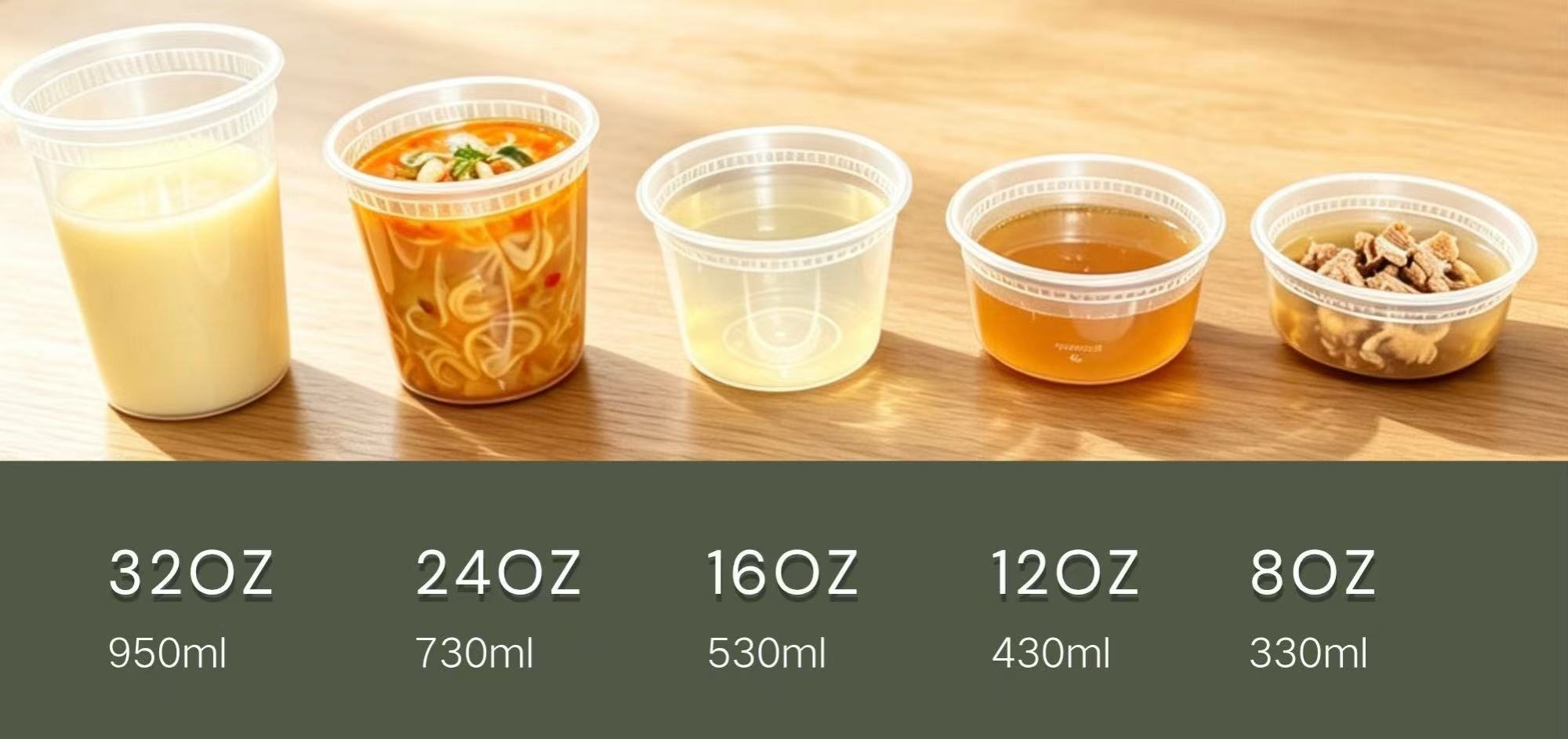

Treat microwave suitability as an exact-product, documented-use decision, not a blanket PP property: a hypothetical review of 3 container models, 2 already-supported lid configurations and 2 food profiles produces 12 application records. This calculation organises a purchasing review; it is not a safety test, a minimum sample size or permission to heat an unsupported container or lid.
A buyer needs an answer that survives the journey from supplier specification to restaurant instructions. Which container is being ordered? What happens to the lid during reheating? Which menu and equipment conditions are covered? The following workflow helps turn those questions into a reviewable purchasing record, without presenting a kitchen demonstration as laboratory evidence.
The official sources below concern the United States. They explain relevant distinctions, but do not establish a particular JR DELIPACK model’s suitability or replace the applicable requirements in another destination. The record templates and numerical examples are editorial purchasing recommendations, not FDA-prescribed procedures.

What should a microwave-use claim actually cover?
Start with the finished article and the instructions supplied for it. FDA advises using cookware made for microwave use and following the oven manufacturer’s instructions; it also explains that food can heat the container and melt some plastics. Material terminology alone is therefore an inadequate purchasing answer. 1: FDA microwave-oven guidance (reference details).
Ask the supplier to identify the base, compatible lid and relevant specification revision. Separate the permitted heating arrangement from the arrangement used during delivery. A transport closure instruction should not silently become a reheating instruction. If the supplied information is ambiguous, record the question as unresolved instead of letting a product photograph decide it.
Your internal approval should have a boundary that another employee can understand. For example, describe the particular menu application and the supporting instruction document rather than entering a single unchecked box called microwave safe. Do not invent a time or power limit to fill an empty field. An unanswered technical question needs clarification, not a plausible-looking number.
Why must buyers check the base and lid separately?
Treat a base and a separate lid as identifiable components in the purchasing record. Request their material declarations and product references independently, then connect them through the supplier’s compatibility statement. Do not infer lid material from transparency, or assume that a claim beside a base photograph covers every optional closure sold with it.
Record the exact lid instruction, including any required removal or venting, only as supported by the product documentation. An attached lid still needs a clear instruction; attachment is not evidence of an approved heating arrangement. Where the written directions conflict with the sales description, ask for a corrected, dated specification before approving the application.
This also improves stock control. Keep replacement lids and alternative base revisions distinguishable in purchasing and receiving records. A substitution that appears commercially equivalent may leave the existing instruction set unmapped to the delivered combination. For the separate physical closure question, use the lid-fit and leak-check buying guide; a closure result should not be extended into microwave-use approval.
Define the food and handling sequence before requesting evidence
FDA’s food-contact reference tables distinguish food types and conditions such as refrigerated storage without thermal treatment from prepared foods reheated in their containers. They are notification reference categories, not a ready-made microwave testing method. A storage-only description should not be treated as equivalent to a documented reheating application. 2: FDA food types and conditions of use (reference details).
Write the proposed sequence in ordinary language: filling, storage, delivery, any transfer of contents and the intended reheating step. Include the actual menu description rather than the loose phrase hot food. Ask a competent reviewer to relate that application to the available documentation; a restaurant menu name is not itself a technical classification. If the same package is used through frozen storage, review the freeze-thaw and stacking checklist for that part of the cycle.
Keep food safety and packaging suitability as connected but separate responsibilities. The restaurant’s validated food-handling procedures must still govern the food. This purchasing guide supplies no cooking schedule, reheating temperature or microbiological acceptance criterion. Choosing a container cannot substitute for those procedures, and a satisfactory food temperature does not, by itself, establish the container’s suitability.
Which documents belong in the review file?
Request the applicable product specification, instructions and the evidence supporting the proposed use. FDA describes the regulatory status of food-contact materials through their individual substances and applicable authorizations; where an FCN is relied upon, its manufacturer, substance and use conditions matter. A reference for a different source or use is not automatically transferable. 3: FDA component regulatory-status guidance (reference details).
For each document, note the issuer, identifying reference, revision or date, described product and the claim it is being used to support. Record any exclusions or missing mapping. A report may be genuine yet fail to answer the particular purchasing question. Keep that distinction visible so the supplier can resolve the actual gap rather than sending the same file again. Use the broader document guide to verify food-contact document scope without treating a generic material claim as product approval.
Use a controlled review when commercial or upstream information is sensitive. Necessary evidence can be reviewed through an appropriate confidential process without publishing source-factory records on a blog. The public guide should explain the evidence requested and its limitations, not expose private certificates, identifying numbers or unrelated supplier information. Escalate unresolved applicability questions to a qualified compliance specialist.
Build a practical application matrix without inventing test results
The opening example assumes that all proposed base-and-lid arrangements already have documented support for the intended kind of use. The matrix organises further review; it does not create that support. If only one arrangement is supported for a model, include only that arrangement instead of forcing the example’s numbers onto the order.
In the hypothetical case, three models multiplied by two documented lid configurations and two food profiles produce twelve records. Suppose nine records have complete document mapping and three await clarification. Administrative completion is nine divided by twelve, or seventy-five percent. The remaining three records are pending; the percentage is not a safety rating, product pass rate or estimate of failure risk.
Uneven product ranges need addition rather than a convenient multiplication. If the first model has four relevant records, the second has two and the third has three, the review contains nine records in total. Preserve the reason for those differences. Otherwise, a neat spreadsheet can hide the unsupported combinations that procurement most needs to notice.
Each record should link the components, intended application, document references, open questions and responsible reviewer. Keep a separate decision field with a written explanation. A complete file can still lead to rejecting the proposed use. Likewise, a supplier’s general statement may leave a file incomplete even when a particular application could eventually be supported.
How should an operational review be scoped?
Only plan an operational review after the intended use is supported and the product and appliance instructions are understood. Ask the supplier or an appropriate specialist to help define the method where necessary. Do not use an unknown container in a kitchen experiment to discover whether a missing microwave-use claim might be true.
Agree the purpose before observing anything. A review might examine whether staff can identify the correct components, follow the documented lid instruction and handle the approved packaging within the established workflow. Record the product revision, food application, equipment and procedure used. Do not vary those conditions casually and then combine all observations as though they describe one controlled comparison.
Choose the number of specimens and acceptance criteria with the responsible technical reviewer, not from the arithmetic example above. The application record count and specimen count are different quantities. Retain dated observations and deviations, including adverse results. If a problem occurs, stop the affected evaluation and investigate; a later successful demonstration does not erase the earlier record.
What cannot be proved by a container that looks unchanged?
Appearance is only one kind of observation. FDA describes food-contact safety assessment as including migration and toxicological information related to intended use. A photograph or visual inspection cannot supply those data. It can document visible condition, but should not be presented as chemical safety clearance or regulatory certification. 4: FDA food-contact information for consumers (reference details).
Write observations narrowly. State which specimen was examined, under which documented procedure, and what was actually seen. Avoid translating no visible deformation into safe for all foods, unlimited reheating or safe at any temperature. Those statements expand the conclusion beyond the observation and beyond the defined procurement question.
Keep the evidence types separate in the approval file: supplier instructions, applicable technical documentation, operational observations and the final purchasing decision. This makes the reasoning auditable without pretending that every document answers every question. A missing technical basis remains missing even if the handling demonstration is convenient and the packaging looks commercially attractive.
Convert the review into usable staff and customer instructions
Prepare proposed instructions from the supported specification, not from a competitor’s label or a generic internet summary. Have the responsible reviewer check that every substantive direction maps to the approved application. If different components require different handling, make the distinction explicit rather than relying on a vague statement printed beside the brand name.
Check the instruction across the actual customer journey. The carton, sales listing, order confirmation and any restaurant-facing information should describe the same supported use. If only the outer carton carries an important limitation, decide how that information will reach the people handling individual containers. Do not assume that an end user will consult a wholesale specification sheet.
Use an instruction-review log before approving artwork. Record the wording, version, applicable models, languages and reviewer. Translation needs to preserve the conditions, not merely the promotional tone. If the destination or use changes, reopen the relevant review instead of copying the previous label onto the next order. Clear instructions are part of the deliverable, not an afterthought once stock arrives.
Keep purchasing, receiving and change control connected
Place the agreed component references and specification revision in the purchase order. Link the approved instructions and evidence file by an agreed reference. Confirm the packing configuration and component quantities separately from the technical use decision. A correct carton count does not establish suitability, but an unclear order can still deliver the wrong combination for an otherwise well-supported application.
At receipt, reconcile the delivered references and lot information against the agreed order before distributing stock to multiple sites. The proposed check is a traceability step, not a replacement for a quality assurance plan. Keep discrepancies visible and obtain a documented resolution. Do not substitute an alternative lid merely to clear a shortage unless its pairing and use are supported.
Ask for notification of relevant specification or component changes and identify who can approve them internally. On a change, record which existing applications need reassessment and what happens to old inventory. Preserve the earlier decision and its scope. A new version should explain what changed rather than silently making the previous approval appear to cover a different product.
A concise pre-order review checklist
Use this suggested checklist as a handover between purchasing and the responsible technical reviewer. Attach the supporting records; a series of ticks without evidence does not answer the questions. Where an item is unresolved, name the missing information and the person responsible for obtaining it.
- Identify the exact base, lid, materials and specification revisions proposed for the order.
- Describe the intended food application, destination and sequence from filling to end use.
- Map the supplier’s microwave instructions to each proposed configuration and record unresolved ambiguities.
- Link applicable technical evidence to its specific product, use and limitations, with qualified review where needed.
- Define any operational evaluation only within the supported instructions, with an agreed method and documented observations.
- Check that proposed sales wording and customer instructions stay within the supported application.
- Connect the approved configuration to purchasing, receiving, substitution and change-notification records.
The useful output is a limited, explainable decision for the actual order. If evidence is missing for one configuration, keep that configuration pending while continuing work on independently supported alternatives. Do not convert uncertainty into an unrestricted claim, and do not describe an incomplete review as a successful product test.
Discuss the selected application with JR DELIPACK
JR DELIPACK supplies PP, PLA and paper-based foodservice packaging with supply and manufacturing support. Start with the product range and factory and quality information to frame a model-specific enquiry. Availability and supporting evidence must be confirmed for the selected product and intended use; this article is not a catalogue-wide microwave-use guarantee.
For a focused review, contact JR DELIPACK with the proposed model, lid requirement, menu application, destination and order quantity. Include the intended handling sequence and any unresolved instruction or document questions. The wholesale buyer’s guide covers broader purchasing comparisons, while the product and quotation FAQs provide general enquiry context.
Frequently asked questions
Does a PP material description establish microwave suitability?
No. Request support for the finished container and the particular intended use. Identify the compatible lid and follow the applicable instructions. Do not substitute a resin description for the product-level review described above, or extend one supported application to an entire range.
Can a clear lid remain on during reheating?
Only use the exact lid in the arrangement supported by its documentation. Transparency does not identify the permitted heating configuration. Obtain clarification if the product directions do not answer the question; do not improvise a venting or removal rule for an unverified product.
Does a BPA-free statement answer the microwave question?
A claim about one substance does not identify the permitted heating arrangement, compatible lid or application limits. Assess the microwave-use question on its own supporting evidence. Keep any separate substance claim within its verified scope rather than using it as a substitute for that assessment.
Is the twelve-record example a required testing programme?
No. It is a hypothetical way to count application records for an assumed product range. It specifies neither specimen numbers nor an acceptance standard. Technical evaluation methods and sampling need an appropriate basis for the actual products and intended decision.
Can a successful kitchen observation replace technical documentation?
No. Record operational observations for their stated purpose and retain the separate evidence supporting the intended use. An unchanged appearance is not migration data. If the technical basis is unresolved, ask the supplier or a qualified specialist rather than treating the observation as a complete clearance.
Does microwave suitability also approve repeated reuse?
Do not assume that a documented heating application establishes an unrestricted reuse claim. Ask what uses and limitations are actually covered, including any relevant repeated-use conditions. Keep the purchasing decision within that scope, and seek separate evidence for an additional claim.
References
- FDA, Microwave Ovens, especially “Cooking with Microwaves” and “Tips on Safe Microwave Oven Operation.” Publication date not provided. Reviewed 6 October 2026. General cookware and appliance guidance, not evidence for a particular packaging model. Back to citation.
- FDA, Food Types and Conditions of Use for Food Contact Substances. Publication date not provided. Reviewed 6 October 2026. Notification reference categories, not a microwave test protocol. Back to citation.
- FDA, Determining the Regulatory Status of Components of a Food Contact Material. Publication date not provided. Reviewed 6 October 2026. Component authorization and use-scope guidance; specific applicability still requires review. Back to citation.
- FDA, Food Packaging and Other Substances that Come in Contact with Food: Information for Consumers. Publication date not provided. Reviewed 6 October 2026. Migration and toxicological assessment context, not a finished-SKU approval. Back to citation.
KEEP READING