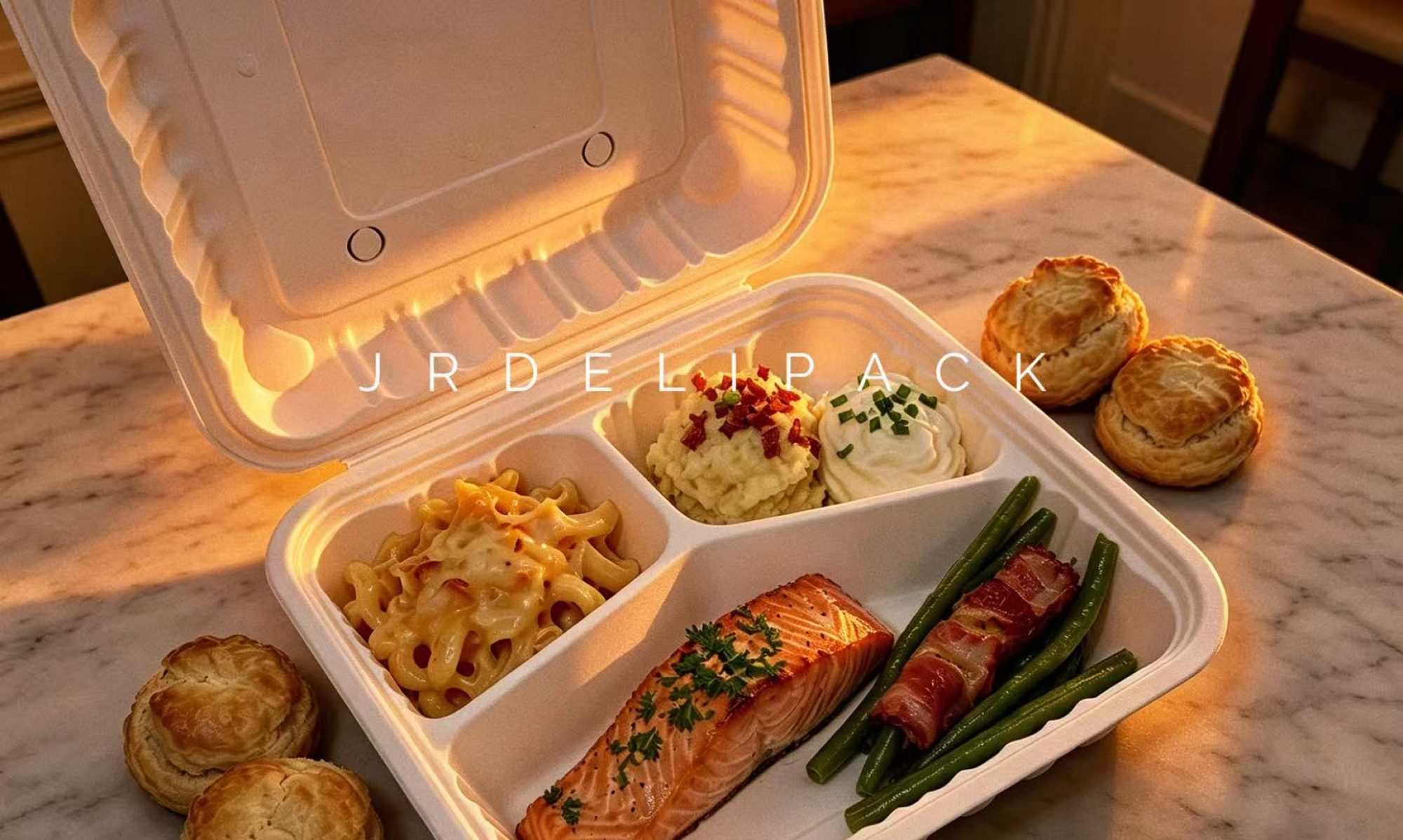

Before buying food containers for California, review each SKU and detachable component separately: SB 54’s 2032 requirements include 25% source reduction and a 65% recycling rate for plastic covered material, not certification of your container. Match the exact material, form, intended food use and label claim to supporting evidence, and identify the responsible U.S. business before approving the order. CalRecycle’s covered-material report, pages 1–2 [3]
This guide separates document readiness from a legal compliance decision. A supplier can provide model-specific records and explain the product being quoted; the buyer’s responsible team still needs to determine the obligations for its own business, distribution channel and claims. Use the worksheet below to identify what is ready, what is missing and who must resolve each issue.

This guide is a procurement checklist, not legal advice or a product-compliance determination. California requirements and litigation can change. Importers, brand owners, distributors, manufacturers and foodservice operators should confirm current obligations with qualified counsel and the responsible agencies before making a claim or placing a product on the market.
What the numbers do—and do not—tell a buyer
The Census Bureau’s July 1, 2025 estimate places California’s population at 39,355,309. That describes population, not restaurants, packaging purchases or wholesale container demand. It cannot establish the claim that California has America’s largest food-container market. A market-size comparison would require a defined product category and comparable sales or trade data, not population alone. U.S. Census Bureau, California population estimate [1]
The SB 54 figures have a different scope. CalRecycle’s report identifies the 2032 plastic reduction and recycling requirements and the requirement for covered material to be recyclable or eligible for compostable labeling. These are not already-achieved outcomes. The report also distinguishes category determinations under SB 54 from the legality of a particular product’s label under other laws. CalRecycle’s covered-material report, pages 1–3 [3]
This distinction prevents a common market-research error: treating a broad statewide statistic as SKU-level evidence. A useful procurement analysis has at least four columns: the item or component; the relevant legal or program scope; the evidence available for that exact item; and the person responsible for verifying it. If one of those fields is unknown, record the gap rather than filling it with an industry-wide assumption.
How should a buyer map products and components?
Start with a component map, not a certificate folder. Record the base, lid, insert, sleeve and other parts, including known coatings and attachments. Do not assume that components sold together have identical materials. CalRecycle’s list combines material and form and says its categories are intended to apply to each detachable component individually. CalRecycle’s component classification explanation, page 1 [3]
For every sellable SKU, capture at least:
- model or internal SKU identifier and product drawing revision;
- body, lid and accessory materials, including known coatings, inks and adhesives;
- dimensions, capacity, compartment configuration and carton pack quantity;
- intended food type and contact conditions, including hot fill, reheating, frozen storage or room-temperature use as applicable;
- any environmental wording or symbol on the product, packaging, specification sheet or online listing;
- the intended sales channel and the U.S. importer, brand owner or other party that will place the product on the market;
- the supporting document, its date, issuing party, covered model or material, and any limitations.
This is a buyer-created traceability worksheet, not a form mandated by California. Its purpose is to stop a supplier declaration for one material or model from being reused for a different SKU without checking scope. If an item changes resin formulation, colorant, coating, manufacturing site, geometry or label, note the revision and ask whether existing evidence still covers it.
Who should confirm responsibility before quoting?
Identify the responsible U.S. business before treating supplier documentation as a complete answer. CalRecycle provides separate guidance on producer definitions, exemptions and requirements; the overseas factory, importer, brand owner and distributor should not be treated as interchangeable roles. CalRecycle Producer Guidance [11]
Before a commercial quotation becomes a purchase commitment, identify the U.S. entity that will import, own the brand, sell the item or otherwise have a role under the applicable rule. Ask that party and its compliance adviser to determine whether it is a producer, whether the material is covered, and whether an exemption, exclusion or reporting duty applies. CalRecycle publishes program information and covered-material resources, but a general page cannot determine a particular company’s status without the facts.
For suppliers, the practical contribution is a complete, version-controlled product data pack: material declarations, component breakdown, product drawings, intended use, carton information and evidence linked to the exact model. Do not promise that a buyer is exempt, that the product is “SB 54 compliant,” or that a certification transfers obligations unless the responsible party has confirmed the basis.
SB 54: check category, scope and implementation status
SB 54 establishes an extended producer responsibility program covering packaging and single-use plastic food-service ware. CalRecycle publishes current program information, producer guidance and category updates. A material name alone does not determine the buyer’s obligations. CalRecycle SB 54 program [2]
Use the current CalRecycle covered-material category list as a starting point. Match the physical form and material of each component to the relevant row; record the date of the list you checked; and save the supporting document with the SKU file. If the component does not clearly fit, ask a qualified compliance reviewer rather than choosing the most favorable category. The list and program page should be rechecked before a major launch, annual reporting cycle, or packaging redesign because the agency publishes updates.
Do not turn a statewide goal into a supplier product claim. For example, a 2032 recycling-rate goal does not prove that a particular container will be collected or recycled in a buyer’s municipality. A material’s technical recyclability, whether it is accepted in a local collection system, whether facilities sort and process it, and whether a specific label is permitted are separate questions.
SB 343: treat recycling claims as a live, date-sensitive review
CalRecycle explains that SB 343 restricts recycling representations, including chasing arrows, by reference to statutory criteria. Its studies inform the assessment but do not approve a particular product’s label. CalRecycle SB 343 guidance [4]
As checked on October 6, 2026, the agency identifies October 4, 2026 as the scheduled manufacturing-date threshold, but reports a July 14 preliminary injunction blocking SB 343 enforcement. It warns that litigation may affect the deadline. Do not present the scheduled date as an unqualified active enforcement deadline; confirm the current notice and court order with qualified counsel before a label decision. CalRecycle’s current litigation notice [4]
For each label claim, keep the exact artwork, SKU and revision; identify the legal basis and evidence; and note who reviewed the claim and when. Separate “contains PP” or a resin code from a claim such as “recyclable.” If local acceptance is mentioned, identify the geography and collection program rather than implying universal availability. Reassess wording on cartons, product pages, catalogs and marketplace listings, not only on the container itself. For the operational distinction, review reuse and recycling claim boundaries alongside the destination-specific requirements.
Compostability and material claims need finished-product scope
Review a compostability claim against the finished product and specified conditions. CalRecycle identifies ASTM D6400-19 for compostable plastic and ASTM D6868-19 for plastic-coated fiber, alongside additional labeling requirements. Material names such as PLA or paper are not substitutes for this assessment. CalRecycle’s compostable-product requirements [5]
A certificate or test report is only useful when its scope matches the finished product. Compare the report’s model, construction, thickness, coating, additives, colorants, test method, date and issuing organization with the item being sold. Ask what conditions are required for the claimed end-of-life route and whether the relevant collection and processing infrastructure exists in the destination market. Industrial compostability does not mean home compostability, and neither one means the item belongs in a recycling bin.
Never infer that PLA is automatically compostable in every setting, that paper is free of coatings, or that a compostable mark establishes acceptance by every local facility. If a product-specific document is missing or a claim’s scope is unclear, remove or qualify the claim pending review instead of stretching another SKU’s evidence.
What does FDA food-contact documentation actually support?
Review food-contact documentation separately from environmental claims. FDA explains that the status of a food-contact article depends on its constituent substances and the authorization route applicable to each substance and intended use. A generic “FDA certificate” should not replace that scope check. FDA’s food-contact component guidance [6] Use the food-contact document verification guide to match the evidence to the actual component and intended use.
For hot food, reheating, frozen storage or oily and acidic foods, specify the intended conditions before asking which document applies. FDA’s reference tables distinguish food types and storage or heating conditions. Match the actual application to the documented scope, rather than selecting the closest-sounding test description. FDA Food Types and Conditions of Use [8]
An effective Food Contact Substance Notification identifies the relevant manufacturer or supplier, substance, intended use and limitations. FDA says a purchaser can rely on the notification for the notified substance from that manufacturer or supplier, consistently with its limitations. Trace that connection; do not treat an unrelated company’s notification as interchangeable. FDA’s effective FCS notification inventory and scope explanation [7]
A useful review packet includes the material declaration, applicable FDA regulatory basis or FCN reference when relevant, conditions of use, supporting test reports, and a change-control contact. Keep confidential formula details protected; the buyer needs sufficient evidence to assess scope, not an unrestricted copy of another company’s proprietary file.
Proposition 65 and chemical questions: use a risk-based process
OEHHA describes Proposition 65 warning requirements in terms of exposure to listed chemicals and applicable risk levels. The material name alone does not settle a warning decision. OEHHA’s Proposition 65 explanation [10] Ask the responsible supplier for relevant declarations or testing, intended-use information and model scope. Have the responsible business obtain qualified advice for its specific exposure and warning assessment.
For proposed claims such as “PFAS-free,” ask the laboratory or qualified reviewer what was measured, what the method cannot establish and how the result relates to the intended claim. Record the method, reporting limit, sample construction and date. Avoid converting a laboratory result into a broader statement that the reviewer has not supported.
Channel matters. CalRecycle’s SB 1335 program covers defined state-facility foodservice operations, including specified state-property concessionaires and contractors. It maintains an approved packaging list and identifies exempt items. Do not treat that channel’s requirements or an entry on its list as universal approval for every California sale. CalRecycle’s SB 1335 scope and packaging list [9]
Which other material, accessory and destination checks should remain in the file?
Keep EPS distinct from PP when comparing alternatives. CalRecycle reports that the required 25% EPS recycling rate has not been demonstrated and that restrictions on producers selling, offering, distributing or importing EPS food-service ware have applied since January 1, 2025. Its guidance distinguishes producers from other businesses; do not turn this into an unsupported claim about every restaurant or every plastic container. CalRecycle EPS requirements and scope [12]
Plant-fiber packaging needs its own chemical review. AB 1200 defines the relevant food packaging by its substantial paper, paperboard or other plant-fiber composition, and prohibits regulated PFAS. Its definition covers intentionally added PFAS with a functional or technical effect, as well as the specified total-organic-fluorine threshold. Check the actual construction and current requirements rather than extending a PP document to a fiber lid, coated paper box or sleeve. California Attorney General: AB 1200 enforcement advisory [13]
For accessory orders, review how the customer dispenses the item. AB 1276 sets request-based rules for specified foodware accessories and single-use condiments, limits compulsory mixed bundles, and includes exceptions and permission for stricter local rules. Do not describe every business or service setting as identical. AB 1276, sections 42270–42273 [14]
As a purchasing method, ask the operator to confirm its service channel before approving a pack format. Separately record each destination city, county and public-contract requirement that its reviewer has checked. A warehouse address or port of entry is not a complete destination list. Keep each location’s official source, review date and unresolved question beside the SKU. When a distributor adds a new restaurant group or service area, revisit that location record instead of assuming the original review covers the expansion. This location worksheet is practical guidance, not a claim that the checklist itself grants market access.
A practical SKU-level readiness worksheet
The following is a buyer workflow, not an agency-mandated certification:
| Review field | What to record | Why it matters |
|---|---|---|
| Identity | SKU, drawing revision, body/lid/accessory components | Keeps evidence tied to the item being quoted |
| Material and form | Resin or fiber, coating, inks, adhesives, detachable parts | Helps map SB 54 category and claim scope |
| Intended use | Food type, temperature, reheating, storage and service setting | Supports food-contact document review |
| Claim inventory | Exact words, symbols and locations used in artwork or listings | Prevents unsupported environmental representations |
| Responsible party | Importer, brand owner, producer or other relevant entity | Directs legal and reporting questions to the right party |
| Evidence | Document name, issuer, date, model scope, method and limitations | Shows what the evidence does and does not prove |
| Geography | California statewide rule plus relevant local program | Separates state requirements from local collection realities |
| Decision and owner | Open issue, reviewer, decision date, next review date | Creates a traceable approval path |
Example using a hypothetical order: a buyer plans to quote a PP base with a separate lid and a printed sleeve. The buyer should not assume the base, lid and sleeve share one material classification or one environmental claim. It records each component, checks the current covered-material list, identifies the entity responsible for the California sale, confirms the food-contact conditions, and reviews every recycling or compostability statement. If the base has a food-contact document but the sleeve’s coating is undocumented, the file is partially complete—not “compliant” as a whole. The next step is to request evidence for the sleeve or remove the unsupported claim, then have the responsible reviewer decide whether the order can proceed.
To make that review trackable, assume this example contains 10,000 complete sets, each with one base, one lid and one sleeve. The purchasing worksheet then covers 10,000 × 3 = 30,000 component pieces but only three component types. If the file contains satisfactory scope records for the base and lid but none for the sleeve, the document-completion indicator is 2 ÷ 3 × 100 = 66.7% of component types. This is a hypothetical administrative measure, not a compliance score, laboratory pass rate or permission to release two thirds of the order. One unresolved component can still require a decision affecting the whole assembled package.
Assign each open item to a named role within the buyer’s team, with a specific next action. For the missing sleeve record, the action might be to obtain the coating specification and relevant declaration, then ask the designated reviewer to assess them. Record the question, request date and decision basis rather than using a generic “pending certificates” note. The commercial team can then distinguish an information request from an unresolved product choice or a legal interpretation that the supplier cannot make for the buyer.
Repeat the exercise when a component changes, without discarding the records for unchanged parts. If the approved drawing revision remains the same but a different lid is proposed, identify exactly which evidence must be checked again. Do not copy the previous review date onto the replacement component. Keeping the earlier version alongside the new decision makes the purchasing trail easier to follow and prevents an apparently complete folder from concealing an unreviewed substitution.
What to ask a supplier before approving artwork or a purchase order
Ask for the model-specific bill of materials and component drawing; intended food and temperature conditions; carton configuration; applicable food-contact documentation and its limitations; test reports tied to the exact model; substantiation for environmental claims; and written notice of formulation, site or component changes. Ask which party in the U.S. will assess producer status and reporting obligations. For a recycling or compostability representation, request the precise legal and technical basis, geography, collection route and review date.
Avoid a vague request for “all FDA and green certificates.” Instead, identify the SKU, component, claim and use case. This makes the response easier to verify and reduces the risk of receiving unrelated documents. If documents contain confidential source details, request a redacted scope statement or a qualified third-party confirmation; do not publish a factory’s private certificate or identifying information as marketing material.
For a quotation, separate product price from unresolved compliance assumptions. State which model and revision are quoted, what documentation is included, what the buyer must verify locally, and which artwork claims are excluded until approved. Do not promise that a product can be sold in every California channel simply because a similar product has been sold elsewhere.
How can JR DELIPACK support the next procurement step?
For product-specific compliance records, start at JR DELIPACK’s food packaging compliance evidence page; it explains that records are product- and scope-specific and that public previews are not blanket certifications. The separate factory and quality evidence page describes the controlled document-review process. For material selection, compare the intended use and exact SKU in the PP, PLA and paper-based foodservice packaging overview; for a broader wholesale workflow, see the B2B food-container buyer’s guide. Buyers can send the chosen model, quantity, destination and intended use through the JR DELIPACK contact page to request model-specific information. These pages describe the supplier’s range and enquiry route; they do not replace legal or regulatory review.
Frequently asked questions
Does California’s population prove that it is the largest market for food containers?
No. The Census figure measures residents, not food-container sales or addressable wholesale demand. A market-size claim needs a defined product category, geography, period and relevant dataset. California QuickFacts [1]
Does SB 54 certify an individual PP food container?
No. Check the current program requirements, product category and responsible party separately. The covered-material report expressly limits what its category determinations establish. CalRecycle’s CMC report [3]
Is SB 343 being enforced after October 4, 2026?
The agency currently reports a preliminary injunction blocking enforcement. Verify the live notice and relevant court order before relying on a deadline; this guide does not offer a legal interpretation. CalRecycle’s SB 343 notice [4]
Is a number inside the chasing-arrows symbol enough to claim a PP container is recyclable?
Do not use the code alone as approval for the claim. Review the exact artwork, item and applicable criteria with the responsible reviewer. CalRecycle’s recycling-label guidance [4]
Does an FDA test report approve every size and formulation from a supplier?
Not automatically. Verify the substance, manufacturer, use and limitations before applying the document to another model. FDA’s component authorization guidance [6]
Can a supplier promise that its PLA or paper product is compostable everywhere?
Not on material name alone. Check the finished product, the proposed wording and the required conditions; home-compostable labeling has its own requirements. CalRecycle’s compostable-label requirements [5]
What should a buyer do if a certificate names a different manufacturer or product?
Ask the issuer or qualified reviewer to establish the connection. For an FDA notification, confirm that the material is from the notified manufacturer or supplier and is used within the notification’s limitations. Keep that answer with the product file. FDA notification scope [7]
References
- U.S. Census Bureau, QuickFacts: California. Population estimate reference date: July 1, 2025. Publication date not provided. Back to citation.
- CalRecycle, Plastic Pollution Prevention and Packaging Producer Responsibility Act. Publication date not provided. Back to citation.
- CalRecycle, SB 54 Covered Material Category List January 2026 Update. Released December 31, 2025, for the January 2026 update. Back to citation.
- CalRecycle, Accurate Recycling Labels. Publication date not provided; includes a notice concerning the July 14, 2026 injunction. Back to citation.
- CalRecycle, Truth-in-Labeling Laws: Protecting California Consumers from False Marketing Claims. Publication date not provided. Back to citation.
- FDA, Determining the Regulatory Status of Components of a Food Contact Material. Publication date not provided. Back to citation.
- FDA, Inventory of Effective Food Contact Substance Notifications. Publication date not provided. Back to citation.
- FDA, Food Types and Conditions of Use for Food Contact Substances. Publication date not provided. Back to citation.
- CalRecycle, Sustainable Packaging for the State of California Act of 2018. Publication date not provided. Back to citation.
- OEHHA, About Proposition 65. Publication date not provided. Back to citation.
- CalRecycle, Producer Guidance. Publication date not provided. Back to citation.
- CalRecycle, Expanded Polystyrene Food Service Ware Requirements. Publication date not provided. Back to citation.
- California Attorney General, AB 1200 Enforcement Advisory: Food Packaging and Cookware. October 17, 2023, pages 1–2; summarizes Health and Safety Code section 109000. Check current code and application to the order. Back to citation.
- California Legislature, AB 1276: Single-Use Foodware Accessories and Standard Condiments. Filed October 5, 2021; chaptered text. Check current code and local requirements. Back to citation.
Source and status review date: October 6, 2026. Agency guidance and litigation may change; recheck primary sources immediately before any publication or buyer decision.
KEEP READING
“California Food-Container Packaging Compliance: A SKU-by-SKU Buyer Checklist”的一个回复