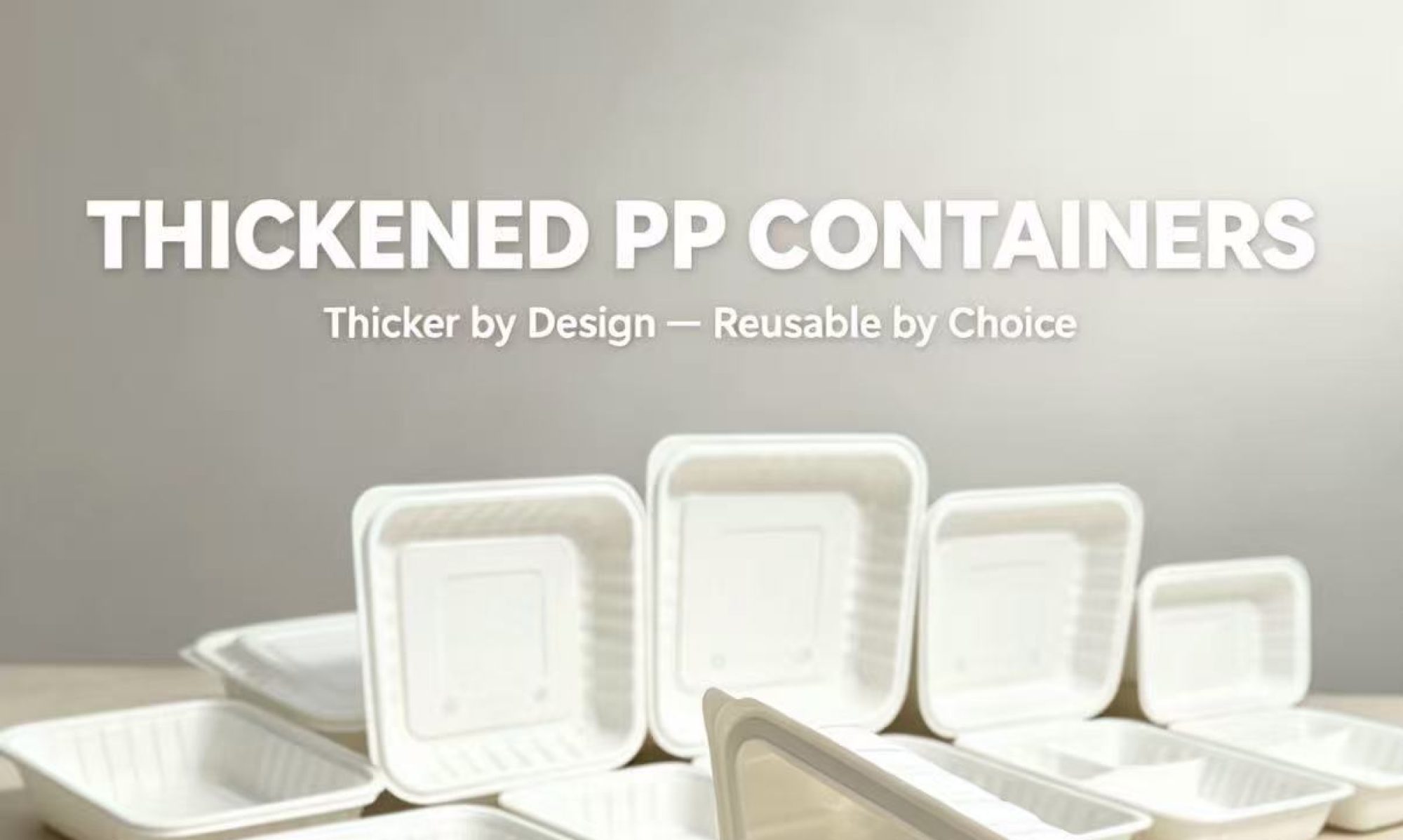
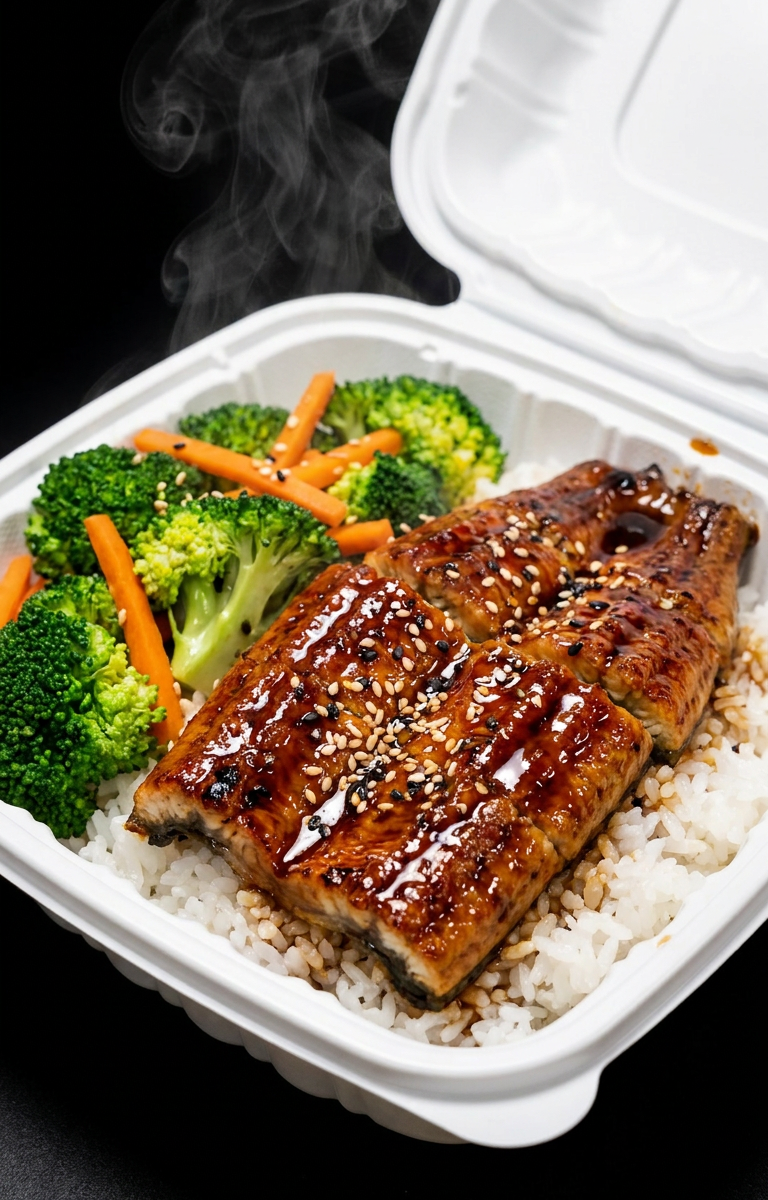
Match each menu item to a documented container-and-lid combination and its actual service conditions: a hypothetical comparison of 6 menu items, 2 candidate pairs and 2 holding conditions creates 24 review scenarios, not 24 automatically approved uses. Capacity alone cannot settle that choice. The shortlist must also address portion shape, liquid movement, closure, food presentation and the intended journey from filling to eating.
The calculations below are invented planning examples, not JR DELIPACK test results or required sample sizes. Use your actual menu and operating requirements to define the review. A purchasing trial can compare handling and presentation, but it cannot replace food-contact documentation or your food-safety procedures.
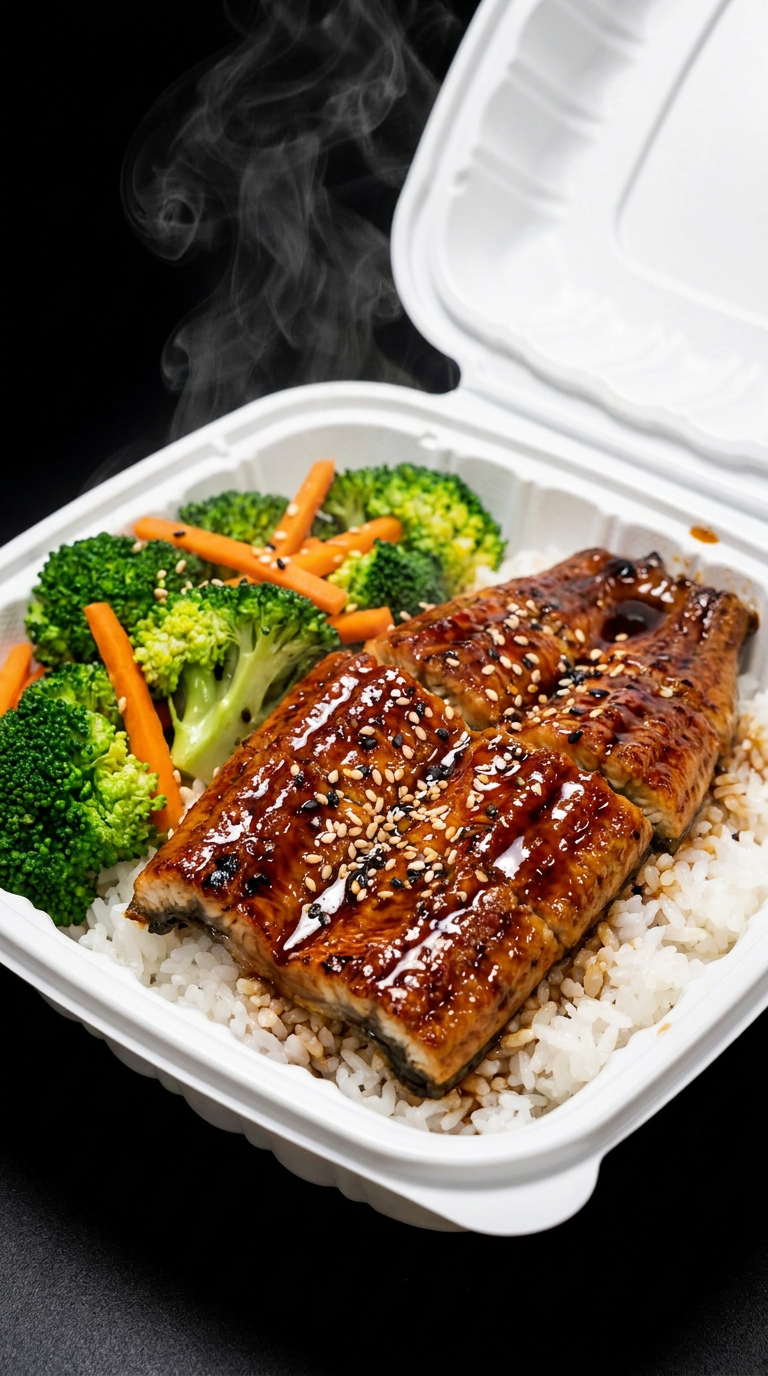
What should a menu specification tell the packaging supplier?
Describe the meal as it will actually be packed, not just its menu name. A noodle dish might contain free broth, a thick sauce or almost no liquid. A salad might be dressed before dispatch or supplied with a separate dressing cup. Those distinctions can change the questions the buyer needs answered even when the selling name stays the same.
Record the portion, ingredients relevant to contact, filling process, holding arrangement and expected customer use. Include whether food will be eaten directly from the container, transferred to a plate, refrigerated for later or reheated. Separate the intended use from a use you merely hope the package will tolerate; unresolved conditions need an answer before they become an operating instruction.
The National Restaurant Association recommends defining required packaging functions and evaluating samples with the actual food, including holding, opening, closing and leakage observations. It also cautions against assuming that every food belongs in the same package. Its sourcing guidance supports practical menu trials, not a universal performance rating for any container. 1: National Restaurant Association sourcing guidance · reference details
Include the people who fill, close, bag and unpack the meals. A presentation choice that looks attractive at the purchasing desk may be awkward at a crowded packing station. Ask each person to describe the specific difficulty observed, rather than recording only a general preference for one shape, color or material.
How should food type and use conditions be matched to documentation?
Ask for evidence covering the finished item and intended application. A familiar material abbreviation is a starting description, not a complete use instruction. The base, lid, decoration and any other relevant component need to be identified well enough to connect the supplied item with the documentation being reviewed.
FDA’s food-contact reference tables distinguish food characteristics such as aqueous, acidic, fatty and dry contact, and distinguish conditions including filling, refrigerated storage, frozen storage and reheating. The tables are references for food-contact-substance notifications; they are not a chart that approves every product made from a named material. 2: FDA food types and conditions of use · reference details
FDA separately explains that authorization review considers substance identity, specifications and limitations on use. That is why a document for a different formulation or application cannot be accepted solely because the package looks similar. These are U.S. regulatory references; buyers must also address the requirements of the destination market. 3: FDA component regulatory-status guidance · reference details
Keep the practical menu worksheet beside the document review. One answers whether the proposed pairing handles the meal acceptably; the other addresses its documented use. A neat, dry-looking sample does not prove regulatory suitability, and a relevant document does not prove that staff can close the lid reliably during your service.
Build a menu-to-container comparison matrix
Use the following worksheet to organize observations. It is not a material recommendation or an approval standard. Add the exact model references, portion and service conditions before comparing candidates, and remove any scenario outside the documented intended use.
| Menu application | Purchasing question | What to observe in the defined trial |
|---|---|---|
| Soup or broth | Does the complete set contain the portion under the intended handling? | Fill level, lid seating, rim condition, movement and opening |
| Sauce or dressing | Can staff fill, identify and close the correct cup consistently? | Portion space, cup/lid code, closure and placement in the meal bag |
| Rice or noodles | Does the usable geometry fit the meal without unacceptable compression? | Portion shape, food release, eating access and lid clearance |
| Fried items | Does the chosen arrangement preserve acceptable delivered texture? | Closure strategy, visible moisture and texture at the defined endpoint |
| Cold deli or salad | Does the package support the actual chilled-service presentation? | Visibility, portion separation, label condition and handling |
| Meal-prep program | Is each storage or reheating stage documented for the combination? | Component instructions, identification and the defined workflow |
Assign separate outcomes to separate questions. For example, an item may remain neatly presented but take too long to pack, or be easy to close but difficult to open without spilling. Recording those findings separately makes the trade-off visible and prevents a single overall score from hiding an important unresolved condition.
Why is nominal capacity not enough?
Confirm whether the supplier’s capacity describes a brimful measurement, a recommended fill line or another stated method. Then compare the actual internal dimensions and usable portion space. Top dimensions, depth, corner shape and lid clearance can affect how the meal fits even when the displayed volume is the same.
Consider a hypothetical measurement: a vessel has a confirmed brimful volume of seven hundred fifty milliliters, and an evenly filled liquid portion occupies six hundred twenty milliliters. The arithmetic difference is one hundred thirty milliliters, about seventeen point three percent of brimful volume. That is a description of this invented geometry example, not a recommended headspace for soup or any JR product.
A real meal may not occupy space like that liquid. Rice, vegetables and irregular pieces can sit above an average fill level, and a lid can project into the interior. Inspect the filled sample and closing behavior rather than treating the calculated empty volume as proof that the food cannot contact or obstruct the lid.
Also keep mass and volume distinct. A portion specified in grams cannot be subtracted from a container capacity in milliliters without an appropriate relationship for that food and packing method. Record portion weight and observed fill geometry together. Do not silently assume that a gram of every prepared meal occupies a milliliter.
What matters most for soup and saucy meals?
Start with the exact base-and-lid codes and the intended filling conditions. Record how staff fill the sample and whether the sealing area remains clear. Establish the portion boundary from the relevant product instructions and the actual application review, rather than choosing a universal percentage of empty space for all bowls and menus.
Evaluate closure and transport handling under a controlled procedure appropriate to the intended use. Use suitable precautions around hot contents, and do not perform improvised tipping or squeezing with scalding food. A trained trial arrangement should distinguish lid seating, container movement and secondary-bag behavior so the observation has a useful cause to investigate.
After the defined hold, examine the set before opening it and record what happens during opening. A closed sample that looks satisfactory can still be inconvenient to handle. Keep observations tied to the particular pairing and conditions; a single successful trial does not justify advertising every size or lid as leakproof.
How should buyers assess sauce and portion cups?
Consider how the cup is filled, closed, counted and placed with the meal. Hinged and separate-lid formats create different handling arrangements, but neither is automatically the better choice for every station. Compare the actual workflow and confirm the model pairing rather than relying on a nominal diameter or an apparently similar rim.
Use the intended sauce or dressing in the application review. Record the portion, filling method, rim condition and closure observation. If the sauce is packed separately from a cold or hot meal, describe that arrangement explicitly; evidence for one contact or storage condition should not be silently extended to another.
Keep packing quantities separate from food suitability. A complete order needs the correct number of usable cups and matching lids, but a balanced quantity does not prove the combination is suitable for the dressing. The portion-cup packing guide addresses those purchasing units, while this worksheet tracks the menu application.
How do rice, noodles and fried foods change the comparison?
For rice and noodles, inspect the served portion after the defined holding period. Check whether the meal is compressed, whether components move into each other and whether the customer can reach the food with the intended utensil. Record sticking or release as an observation for that meal and sample, not as a general material ranking.
Compare wide and deep formats against the actual packing task. A wider opening may help the particular presentation, while a deeper format may suit another portion shape. Neither advantage follows from capacity alone. Include any compartment boundaries in the review, especially if the purpose is to keep a sauce or garnish separate until eating.
For fried items, define what acceptable delivered texture means before the comparison. Assess the food at the intended service endpoint, not only immediately after packing. Record visible moisture and the packing arrangement alongside the texture observation so a later reviewer can distinguish a change in closure from a change in food or timing.
If considering ventilation or separate packing, obtain an appropriate designed format and review its intended use. Do not make unapproved holes in a container or lid and treat the altered result as evidence for the standard supplied product. A change that helps presentation must still meet containment, handling and food-safety requirements.
What should be checked for chilled meals and reheating?
For cold deli items and salads, evaluate the intended display and handling arrangement. Observe visibility, label condition, lid seating and the movement of separate components. If dressing is added at a different stage, make that stage part of the application definition instead of treating dressed and undressed food as one identical use.
For a meal-prep program, map the sequence explicitly: filling, storage, transport and the customer’s expected preparation. Do not infer freezer or reheating suitability merely from refrigeration suitability. Instructions should identify which components remain in place and which are removed, using the evidence for the exact supplied combination.
The microwave-use document guide covers the separate review of reheating claims. Keep that approval distinct from a satisfactory chilled presentation. This menu guide does not prescribe cooking times, storage-life extensions or food-temperature limits; use the applicable food-safety procedure and confirmed product instructions.
How many comparison scenarios are you planning?
Return to the opening example. Assume six different menu items are being considered with two candidate container-and-lid pairs, each under two relevant holding conditions. Multiplying those counts produces twenty-four combinations for review. Each combination is a scenario definition, not a sample, a replicate or a certification result.
Suppose the documentation review excludes four combinations because the proposed use is outside the supported scope. That leaves twenty scenarios eligible for further practical evaluation under the example’s assumptions. The excluded four should stay recorded with their reason; they must not be counted as successful tests or made eligible merely because a physical sample is available.
Decide the number of samples and repeated observations separately, using the risk, variation and intended decision. Twenty scenarios do not automatically require twenty samples, and completing one observation in each does not establish statistical confidence. The worksheet helps expose the workload; it does not supply a universal sampling plan or pass threshold.
Where several menu items appear similar, document why a shared observation would be informative and what remains different. Do not group them solely to reduce the count. A change in sauce, portion, packing sequence or customer use can require a separate review even when the same container is proposed.
Run a controlled comparison and retain the decision
Before the trial, identify the samples and agree on the observations that matter. Keep the meal, portion, handling sequence and endpoint comparable between candidates. If something changes, record it at the time. Comparing a freshly prepared meal in one container with an older meal in another would not isolate the packaging difference.
Use the lid-fit review guide for detailed pairing questions. Retain a reference sample and the exact component identifiers. If a later order uses a changed lid or specification, revisit the affected menu rows rather than relying on the photograph of an earlier successful meal.
For each scenario, record the result as acceptable for the defined use, unresolved or unsuitable, with the reason and responsible reviewer. Keep operational observations separate from document approval and food-safety controls. An attractive presentation score cannot cancel a missing use instruction, and a commercial discount cannot resolve an unsupported application.
Then translate the decision into an order that staff can recognize. Specify the approved pair, required packing, menu applications and any limits on substitution. Review whether the chosen assortment is manageable at the station, but retain a justified exception where one package cannot meet a particular menu requirement. Standardizing the wrong use is not a purchasing improvement.
- Keep the menu description, portion and service sequence with each approved pairing.
- Preserve the document versions and the exact sample references reviewed.
- Record practical observations, unresolved questions and the decision date.
- Reassess affected rows when food, component, filling or customer use changes.
- Confirm the delivered identifiers before treating the order as the approved configuration.
JR DELIPACK supplies PP, PLA and paper-based foodservice packaging with supply and manufacturing support. Explore the product range and factory and quality information when defining a shortlist. Suitability and supporting evidence must be confirmed for the selected product, lid and destination; the illustration is not a product test record.
Contact JR DELIPACK with the menu item, portion, filling conditions, holding and delivery arrangement, expected customer use, quantity and destination. Include the exact application questions that remain open so the enquiry can focus on an appropriate configuration and its supporting information.
Frequently asked questions
Can I select a container from its ounce capacity alone?
No. Confirm the capacity method and inspect the portion’s shape, fill level and lid clearance. Two formats with the same nominal volume can present or handle a meal differently. Use the actual food and confirmed internal dimensions; do not convert a weight in grams into a volume without an appropriate basis for that portion.
Does a material name establish suitability for every menu item?
No. Identify the finished package and supported contact and use conditions. A base and lid can have different instructions, and a description such as PP, PLA or paper-based does not establish all applications. Keep the documentation review connected to the precise meal and service sequence rather than treating the material label as a universal approval.
Is the hypothetical headspace percentage a recommended fill limit?
No. It only expresses the difference between the example’s assumed brimful volume and evenly filled liquid volume. It does not account for an actual lid, irregular food or the selected product’s instructions. Determine the appropriate fill arrangement from the documented use and controlled application review, not from that example percentage.
Can one successful soup trial approve other sizes and lids?
Not automatically. Keep the finding attached to the tested combination, portion and conditions. A different lid, size or filling arrangement can change the question being evaluated. Review those differences and retain the basis for any extension; do not turn a limited observation into a blanket leakproof claim across an entire range.
Do twenty-four scenarios mean twenty-four samples are sufficient?
No. The scenario count describes the combinations being considered, while sample quantity and repetition concern how the review will be conducted. Define those separately according to the decision and risks. Unsupported uses must be removed before evaluation, and a completed worksheet does not itself establish certification or statistical confidence.
When should the menu-to-package decision be revisited?
Revisit affected uses when the recipe, portion, component, specification, filling method, storage sequence or customer instructions change. Record the reason and what needs rechecking. Keep the earlier decision as a dated reference rather than applying it indefinitely to a materially different meal or package simply because the product name remains familiar.
References
- 1. National Restaurant Association — Don’t get boxed in: Do’s and don’ts in package sourcing. Published 6 April 2022; read 7 October 2026. Practical menu/function and sample-use guidance; historical consumer percentages are not used. Return to citation.
- 2. U.S. FDA — Food Types & Conditions of Use for Food Contact Substances. Tables read 7 October 2026. Reference categories for food-contact-substance notifications, not a blanket material or finished-product approval. Return to citation.
- 3. U.S. FDA — Determining the Regulatory Status of Components of a Food Contact Material. Relevant identity, specification and conditions-of-use sections read 7 October 2026. Supports the scope of component review, not a compliance conclusion for a JR DELIPACK item. Return to citation.
KEEP READING
“How to Match Takeout Containers to Different Food Types”的一个回复